Our Blog

Why choose an orthodontic specialist over a general dentist?

May 1st, 2025

Patients have so many choices for straightening their teeth nowadays — clear aligners, ceramic braces, lingual braces, self-ligating braces — but who is best suited to guide them through orthodontic treatment? Well, an orthodontist like Dr. Robert Kubo and Dr. James Kubo in Fresno, CA of course!

This may seem obvious, but there’s misinformation circulating with regard to the roles dentists and orthodontists play in treating patients’ oral health.

Dentists are trained to clean teeth, fill cavities, perform certain dental surgeries, and examine overall oral health. Many dentists now offer braces to their patients, but according to the American Association of Orthodontists, it’s better to consult an orthodontist if you need to straighten teeth or fix a bite.

Why an orthodontist? Because they are...

  • Specialists in straightening teeth and aligning jaws, even advanced cases
  • Required to study an additional two to three years after dental school
  • Trained to choose the correct treatment option because they have worked with all the available options
  • Trained to recognize the potential pitfalls with certain treatments and cases, which means there’s less chance of problems after treatment has started or been completed
  • Familiar with emerging treatments and technologies so they can make the best choice for a patient’s case

Some dentists claim to have taken enough continuing education or additional training to offer braces to their patients. But this can't compare to the advanced training an orthodontist receives during his or her education.

Ideally, dentists and orthodontists work hand in hand to make sure oral health and the alignment of teeth and jaws are the best they can be. Think of a dentist as the one who is there for a lifetime, to make sure teeth and gums are healthy.

In contrast, an orthodontist is the highly skilled teammate who helps the dentist by straightening teeth and aligning the jaws over the course of a few years. Instead of one replacing the other, they work together for the health and benefit of their patients.

Permanent or Removable Retainers: Which is right for you?

April 24th, 2025

When the time comes for Dr. Robert Kubo and Dr. James Kubo to remove your braces, it is very exciting. Unfortunately, it can be somewhat confusing, too, because you are faced with choosing between two kinds of retainers. Should you go with permanent, removable, or a combination of the two? It is always wise to follow Kubo Orthodontic Group recommendations, but knowing more about the two types of retainer beforehand can be helpful.

Removable Retainers

Removable retainers offer the advantage of easy use: you will generally put a removable retainer in at night and take it out in the morning. Regardless of your retainer schedule, you'll be able to enjoy some time with no retainer. However, a removable retainer can easily be forgotten at times, and this means you won't be taking full advantage of teeth retention.

Another potential advantage of a removable retainer is that you can take it out and brush and floss your teeth with ease, which is more of a challenge with a permanent retainer. Although removable retainers can be very effective, they don't tend to be as effective as permanent retainers, especially if they are not used as directed.

Permanent Retainers

Permanent retainers are the clear choice for patients who want to “get it and forget it.” Once your permanent retainer is placed in your mouth, you won’t need to worry about daily retainer schedules, since it is permanently affixed to your teeth.

Because teeth begin to shift naturally as we age, a permanent retainer typically offers better long-term results for teeth straightening than a removable one. You can't forget to put it in — it's already there! Temporary retainers get lost or are forgotten on trips, and often fail to get used as often as they should be.

One drawback to permanent retainers is flossing. Some patients find it more difficult to floss with a permanent retainer, but we can show you effective ways to floss fairly quickly with your permanent retainer.

Some orthodontists may recommend a combination of the two; for example, a removable retainer for the top teeth and a permanent one for the lower ones because the lower teeth are smaller and tend to shift more.

Ultimately, the most important thing to remember is that wearing your retainer as directed is extremely important. As long as you follow our orthodontist’s advice, you will get the best results from your retainer, regardless of its type. If you’re still not sure whether the choice you’ve made is truly right for you, get in touch with us at our Fresno, CA location right away!

Every Day is Earth Day

April 17th, 2025

During the early days of the environmental awareness movement, those who demonstrated against pollution, toxic chemicals, and the general public health were known as hippies. The early 1970s were a time of change, and assertions that we needed to pay more attention to the Earth's atmosphere were generally dismissed. But within a couple decades, it had become clear that the previous generation was right; the citizens of the world needed to become more environmentally conscious.

Many people feel that they can't make a difference if they don't do something big. But caring for the environment doesn't have to be an all-or-nothing concept. In fact, the little things you do can add up to make a great impact, especially in our community. Here are a few ways you can help the environment on Earth Day, April 22nd and all year around.

Four Small Ways to be Environmentally Friendly

  • Recycle Your Textiles. Nearly 21 million tons of textiles are added to American landfills each year, according to the Environmental Protection Agency. Donating your unwanted clothing to a secondhand store or an organization that repurposes fabric helps cut down on solid waste and conserves natural resources.
  • Reduce Usage of Disposables. Plastic bottles and bags, disposable diapers and other things we can use and toss out are convenient, but they're not necessary. Simply choosing to replace one of type of disposable with a reusable product can help you cut down on waste that has a large negative impact on our environment.
  • Conserve Water. If everyone in the United States turned off the water while brushing their teeth, more than 1.5 million gallons of water could be conserved. Turn the water on long enough to wet your toothbrush for brushing and rinsing, and then immediately turn the water off again.
  • Turn Off the Lights. Flip the light switch to "Off" if you're going to leave a particular room for 15 minutes or more. This will conserve energy on incandescent light bulbs and cut down on cooling costs.

It's not necessary to be an activist or install solar panels all over your home to help the environment. Although you can do these things, the little everyday measures make a big difference in helping to conserve energy and the environment, while reducing your carbon footprint. Our team at Kubo Orthodontic Group wants to remind you to celebrate Earth Day and help the environment, knowing that it will benefit your and your children's generation.

Your First Orthodontist Visit

April 10th, 2025

If you’ve never been to an orthodontist before, you might be wary of what to expect during your first visit. Your dentist may have recommended an orthodontic appliance if it could improve the state of your oral health. More often, you may suspect that you or your child should have orthodontic work done if the time is right financially.

Understanding the various options your orthodontist can perform will be helpful to know before your appointment.

Your initial appointment usually lasts at least an hour. It’s common that diagnostic work will need to be done. This might include getting X-rays so Dr. Robert Kubo and Dr. James Kubo can better understand the overall structure of your mouth. A quick mold of the mouth may also be taken if braces are a possibility.

Your first appointment is intended to find out how we can efficiently give you a great smile! Here’s a list of common questions you might ask during your first visit:

  • Is now the right time for treatment, or should it wait?
  • What is the estimated length of time for the treatment?
  • How much should I expect to pay? What are the payment options?
  • What can I do to prevent or minimize pain?
  • Is it likely that I will wear extra appliances in addition to braces to correct my overbite, underbite, or other problems?
  • Are there specific foods I will need to avoid?
  • Will braces prevent me from playing my favorite sport or musical instrument?
  • How can I keep my teeth clean with braces?
  • How often will I be expected to come in for checkups and other appointments?

Don’t be afraid to ask these and other questions before you or your child commits to getting braces. Dr. Robert Kubo and Dr. James Kubo and our team are happy to answer any of them before or after your visit.

Once you’ve had your initial consultation, our team will be here throughout the entire process if any problems arise. We look forward to seeing you at your first appointment in our Fresno, CA office!

Kubo Orthodontic Group
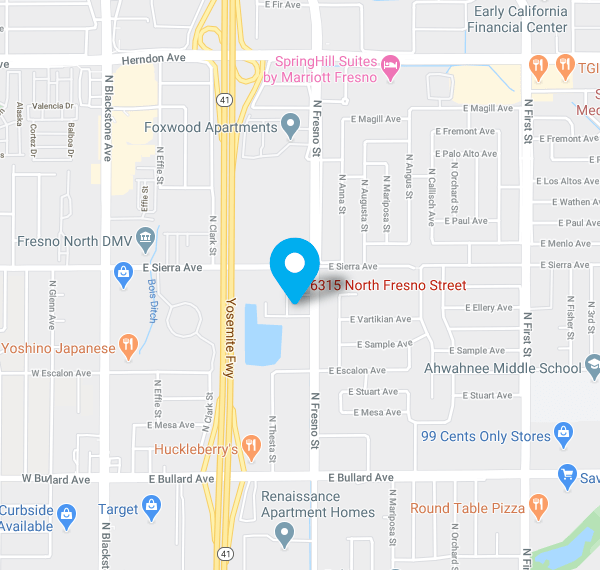
(559) 438-7600 6315 N Fresno St Suite 101
Fresno, CA 93710

Office Hours

  • Monday: 8:00am to 5:00pm
  • Tuesday: 8:00am to 5:00pm
  • Wednesday: 8:00am to 5:00pm
  • Thursday: Closed
  • Friday: Closed
  • Lunch daily from 12:00pm to 1:15pm