
Our Blog

How does wisdom tooth removal affect orthodontic care?

February 2nd, 2016

The purpose of braces and other forms of orthodontic treatment at Kubo Orthodontic Group is to correct malocclusion, also known as crooked or crowded teeth, or “bad bites.” Past orthodontic practice dictated that wisdom teeth be removed, especially in cases of crowding.

The wisdom teeth are the last teeth to come in, and are officially known as the third molars. The teeth typically erupt, or break the surface of the skin, in young people between the ages of 13 and 20.

Sometimes, wisdom teeth are impacted. That means they cannot break through the gum tissue. This typically happens when the mouth or jaw is too small to accommodate the teeth. Impacted wisdom teeth can become infected, and some dentists and orthodontists may want to remove them as prophylaxis to prevent possible future infection.

Justification for removing wisdom teeth

Dr. Robert Kubo and Dr. James Kubo will tell you that in some cases, wisdom teeth attempt to come in the wrong way, either tilting in the jaw, or sideways. If the mouth is too small to accommodate these additional teeth, they inevitably become impacted. Swelling or infection of the gum flap above an impacted wisdom tooth may cause pain. The greatest danger is pericoronitis, a potentially dangerous infection that can occur in the gum area around an impacted wisdom tooth, or around a wisdom tooth that has erupted.

Orthodontists base their decision to remove wisdom teeth on each patient's individual circumstances. To learn more about the impact wisdom teeth have on orthodontic treatment, or to schedule a visit with Dr. Robert Kubo and Dr. James Kubo, please give us a call at our convenient Fresno, CA office!

What should we blog about?

January 26th, 2016

As a patient at Kubo Orthodontic Group, your opinion matters! Dr. Robert Kubo and Dr. James Kubo and our team love hearing what our patients think about our practice and the services we provide, and now we want to know, what do you think we should blog about?

Perhaps there’s a treatment you’ve always wanted to know about, or you’d like to learn about a specific way to improve your health and smile. Whatever your idea, we’d love to hear about it! You can let us know by posting here or on our Facebook page!

The Invisalign® Treatment Process

January 19th, 2016

Invisalign is gaining traction as a sought-after solution for orthodontic problems. Unlike traditional braces, which require the placement of brackets on teeth and the connection of unsightly wires, Invisalign works nearly invisibly (as its name suggests). Particularly for those who do not wish to draw attention to their orthodontic work, Invisalign provides an attractive solution.

Consultation with a Treatment Provider

Our practice has received specialized training to work with Invisalign. During your consultation appointment, Dr. Robert Kubo and Dr. James Kubo will assess your smile needs. In some cases, the type of problem may not lend itself to correction through Invisalign, and we may offer an alternative solution.

Creation of a Custom Treatment Plan

Invisalign works using a series of customized clear trays that fit almost perfectly over the teeth. To create these trays, Dr. Robert Kubo and Dr. James Kubo will take X-rays and impressions of your teeth. These are submitted to a specialized laboratory that makes a 3D image of your smile. This is used to create a specialized treatment plan that provides an estimate of how long treatment will take.

Arrival of Custom Trays

Once your customized trays have arrived, the treatment begins. For Invisalign to work properly, you must wear the aligners 20 to 22 hours per day, removing them only to eat, drink, and brush your teeth. The trays gently draw your teeth into proper alignment, correcting your orthodontic problems as you go about your everyday life.

In general, you will replace your aligners with a new set every two weeks. This is to encourage your teeth to continue moving throughout the treatment process. You’ll need to check in with our Fresno, CA office every six weeks or so to ensure treatment progresses smoothly.

Beautiful Smile: Complete!

Once you complete your individualized treatment plan, you’ll have the smile you’ve always dreamed of. Like with traditional braces, Dr. Robert Kubo and Dr. James Kubo may recommend that you wear a retainer to ensure that your teeth remain in their new positions.

Too old for braces? You Might be Surprised

January 12th, 2016

Although adolescence is a common time to get braces, there’s no reason for adults of any age to have to deal with crooked teeth, overbite, underbite, or other dental issues. In fact, the American Association of Orthodontists notes that demand for orthodontic treatment in adults continues to grow, with adults representing 20% of new patients.

You’re never too old for braces or other orthodontic appliances, but it’s important to consider the following:

  1. Braces don’t have to be as noticeable as the metal brackets of the past. Many adults opt for ceramic or plastic braces, which are bone-colored or clear, respectively. Another option is a lingual appliance, which attaches to the back side of your teeth. These so-called “invisible” braces are much less noticeable than traditional options.
  2. By adulthood, bone growth has stopped. This means that certain structural changes can only be achieved by surgery. Although this typically affects people with significant crowding, bite, or jaw problems, Dr. Robert Kubo and Dr. James Kubo can provide an individualized treatment plan that addresses your unique issues.
  3. Treatment may take a bit longer. The length of orthodontic treatment tends to be slightly longer for adults than adolescents. Exact estimates vary by individual, but the average length of time for adult braces wearers is two years, according to the Harvard Medical School.
  4. Outcomes are just as good for adults! Many adults worry that it’s too late to treat their orthodontic problems. However, treatment satisfaction tends to be very high, which is a testament to how effective braces can be in middle-aged and older adults.
Kubo Orthodontic Group
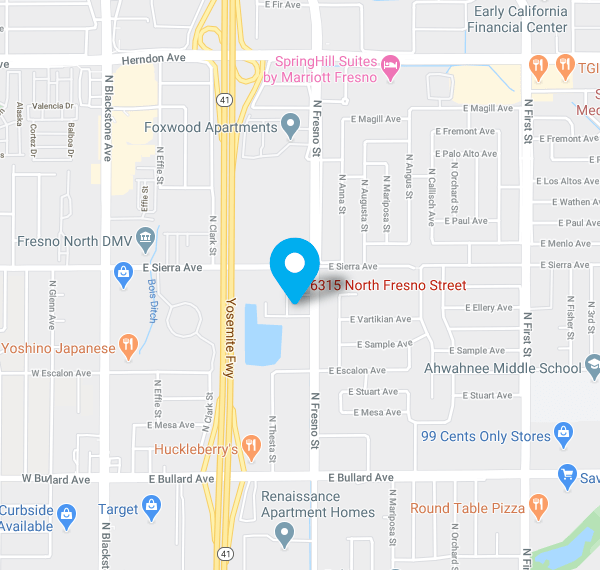
(559) 438-7600 6315 N Fresno St Suite 101
Fresno, CA 93710

Office Hours

  • Monday: 8:00am to 5:00pm
  • Tuesday: 8:00am to 5:00pm
  • Wednesday: 8:00am to 5:00pm
  • Thursday: Closed
  • Friday: Closed
  • Lunch daily from 12:00pm to 1:15pm