
Our Blog

Orthodontics and Oral Piercings

May 10th, 2023

Traditional braces and oral piercings—does the inevitable meeting of metals pose any risks? Let’s look at some of the potential problems with oral piercings, and you and Dr. Robert Kubo and Dr. James Kubo can decide if you should take a break from jewelry while you’re in treatment.

  • Tooth Damage

Enamel is the strongest substance in our bodies, but when up against constant contact with metal? It’s not a fair fight.

Tongue piercings, especially, cause problems for your teeth. Whenever you speak or eat—even while you’re sleeping!—your tongue is making contact with your teeth. This continual tapping of metal on enamel can chip and crack teeth and damage fillings. A serious fracture could mean a root canal.

You’re getting braces to create a more attractive, healthy smile, so keeping your teeth intact is a priority.

  • Gum Problems

Your gums are affected by orthodontic treatment. As the teeth move, the gums, ligaments, and bone around them adapt and even reshape over time. You might notice when you first get your braces, or when you go in for an adjustment, that you have a few days of swollen, sensitive gums afterward. You might also find that you are at greater risk of gingivitis, because it can be harder to keep plaque away from your gumline until you perfect your brushing and flossing skills.

Oral piercings bring their own gingival dangers. Jewelry in the tongue or lip can rub against gum tissue, especially around your lower front teeth. As the gum tissue continues to be irritated and inflamed, it pulls away from the teeth. This process is called gum recession.

Receding gums expose the tops of your roots to cavity-causing bacteria. They make you more sensitive to hot or cold foods. Pockets between gums and teeth can harbor infections that threaten the tooth itself.

Caring for your gums during braces is important for your dental health. Since people with oral piercings have a much higher rate of gum recession that those without, why add one more risk factor to your oral health?

  • Metal vs Metal

Lip and tongue piercings can make contact with traditional brackets and wires, especially if you have a habit of playing with them. And let’s not forget lingual braces! Lingual braces are almost invisible because their brackets and wires are custom fitted to the back of your teeth. Whenever you speak or eat, you’ll be taking the chance that a tongue piercing will damage these custom-made appliances.

Dr. Robert Kubo and Dr. James Kubo can tell you if your piercings are in any danger of interfering with your braces, but even if you’re planning on aligners, there are additional reasons to consider retiring your oral jewelry. Dental associations and medical associations discourage oral piercings because they can damage teeth and gums. And there’s more. Oral piercings can lead to swelling, bleeding, allergic reactions, infection, and nerve damage.

The reason you’re considering braces is because you want a healthy, attractive smile. Don’t let a tiny piece of jewelry make your life and your treatment more difficult! Do some research and talk to our Fresno, CA team about your oral piercings, and come up with a solution that’s best for your health and best for your smile.

Keeping It Clean—Better for Your Retainer, Better for Your Oral Health!

May 4th, 2023

Now that you’ve graduated from your braces or aligners, you might think you’re finished with orthodontic cleaning tips. Not quite yet! Your retainer needs love, too—not just because it can look or smell “less than appealing” without your help, but because it’s good for your dental health.

Removable Retainers

If you have a Hawley retainer or a clear retainer, cleaning it whenever you remove it is a great idea. Unappetizing white patches mean plaque or mineral deposits from your saliva have dried and hardened on your retainer’s surface. And if you notice an unpleasant taste or odor, it probably means that germs and bacteria have made themselves at home and are growing in and on your appliance.

You don’t want old plaque or new bacteria in your mouth! Here are some ways to keep your retainer clean and fresh:

  • After wearing it, you can clean your retainer with a toothbrush, but don’t brush too vigorously. You might scratch it. Use a soft or even extra-soft brush to clean out all the nooks and crannies, and then rinse.
  • Use cleaning products which have been recommended by Dr. Robert Kubo and Dr. James Kubo if your retainer needs a deeper clean. Denture cleaners, retainer cleaners, and even toothpastes can be too abrasive or cause discoloration, so use the products made for your specific retainer.
  • Let your retainer dry before storing it in a dry place after cleaning. Shutting a damp retainer into a closed case provides bacteria with the damp, dark environment they thrive in. (PS—clean your case regularly, too!)
  • One of the benefits of a clear retainer is that it’s almost invisible. And you can help keep it that way by removing it whenever you eat or drink. Your retainer can become stained from colored foods or liquids.

Fixed Retainers

A permanent retainer is a small piece of wire that is custom-fit and bonded to the inside of selected teeth to keep them from shifting. Because food particles and plaque can accumulate around a fixed retainer, brushing after meals and at least twice a day is recommended. Bacteria and plaque cause bad breath, cavities, and tartar buildup, and removing tartar might require removing your retainer.

While a fixed retainer can be tricky to clean, there are techniques and products that make cleaning easier and more effective:

  • An orthodontic toothbrush with a smaller head might reach behind your teeth more comfortably.
  • Don’t forget to floss! Using a floss threader will help you get that wriggly floss behind the retainer and between your teeth.
  • Try a water flosser. These handy devices direct a stream of water right into hard-to-reach places for more thorough cleaning.

If you’re having trouble keeping your retainer clean, our Fresno, CA orthodontic team can teach you all you need to know about tools and techniques to keep your retainer—and your teeth and gums—healthy. An attractive smile is a great thing. A healthy, attractive smile is even better!

When Your Permanent Retainer—Isn’t

April 27th, 2023

Even though it’s called a “permanent retainer,” your fixed retainer isn’t necessarily meant to last a lifetime. But with care, it should last just as long as you need it, keeping your teeth perfectly aligned after your orthodontic treatment is complete. Why is this retainer the one to choose for challenging alignments?

A fixed retainer is often used for teeth which were very crowded or had large gaps before treatment, especially along the bottom teeth, which tend to shift more. With a permanent retainer, a custom fitted wire is attached with a bonding adhesive to the back of each of the selected teeth. This design makes sure that the teeth can’t shift out of place while your bones and ligaments strengthen around them.

Occasionally, though, your permanent retainer isn’t quite as permanent as it should be. If you think your fixed retainer is becoming “unfixed,” what clues should you look for?

  • Broken wire

A clearly broken wire can be obvious, or you might discover it when you notice pain or irritation caused by the end of a wire poking around your tongue or mouth.

  • Loose bond

The orthodontic adhesive used to bond the wire to each tooth can come loose as the result of an accident, an unfortunately chewy treat, or simply with the passage of time.

  • Shifting teeth

You might not notice anything wrong with your retainer, but what you do notice is that your once-straight teeth have started shifting back to their old positions. If you see any movement in your teeth, your retainer might need repair.

What should you do?

  • Give our Fresno, CA orthodontic office a call! It’s important to act promptly to prevent further retainer damage, oral discomfort, and tooth misalignment.
  • Rinse with warm water if your mouth is irritated.
  • If a wire is poking you, call us for advice on gently pushing it back into place.
  • Orthodontic wax can protect your teeth and tissue from detached wires.
  • If you have a clear retainer, wear it until you can come in. If you don’t have one, and you can’t see us immediately, ask if an over the counter moldable retainer is a good idea to help keep your teeth aligned in the meantime.

One benefit of a fixed retainer is that it’s almost invisible because it’s behind your teeth. But this hidden location can also make it difficult to notice potential problems. Fortunately, there are some proactive steps you can take to help your permanent retainer—and your bite—stay healthy:

  • Avoid foods which are sticky, hard, or chewy. If a food can damage traditional braces, it can damage your retainer.
  • Wear protective gear like mouthguards and helmets when you’re active—they protect more than just your retainer!
  • Ask your dentist to examine your retainer adhesive’s staying power whenever you have a checkup.

If you notice a detached wire or loose adhesive or see your teeth shifting, give Dr. Robert Kubo and Dr. James Kubo a call. It’s important to act promptly to fix a fixed retainer, because your teeth and bite alignment are in jeopardy when you delay. And always bring your retainer (or retainer pieces) with you in case we can repair it.

Permanent retainers don’t necessarily last forever. But whether your fixed retainer is going to be with you long-term, or whether you’re going to transition to a removable retainer in the future, let’s make sure your permanent retainer is just as “permanent” as it needs to be!

Questions, questions…

April 26th, 2023

When beginning orthodontic treatment, most patients ask Dr. Robert Kubo and Dr. James Kubo and our team a lot of questions about what to expect, while others choose to just "go with the flow" and leave it to us to build for them a beautiful smile. And for our team at Kubo Orthodontic Group, that's understandable.

But for those who do ask questions, two of the ones we frequently hear are "Will my braces hurt?" and "How long will these be on?"

We explain to our patients that despite what they've heard, braces do not hurt when they're initially put on. Yes, you will experience soreness after your braces are placed and when your teeth start to move. Too often, our patients hear horror stories about how much it hurts to get the braces on, so they tend to over-worry. The truth is, after their braces are on, almost all patients say "that's it?" because it's actually easy and painless!

At Kubo Orthodontic Group, we answer most of your other questions during your initial exam. When a patient visits our office for the first time, we give him or her a time estimate of how long it will take to achieve their ideal smile. All other questions are answered at the bonding appointment when the braces are placed. We cover all the topics, everything from eating to brushing with braces, but we also know that after your initial appointment, it's natural for you to have questions about your or your child's treatment. And we are always here for you; we are thorough and always try to answer any questions or concerns you may have. As a patient, that's one thing you never have to worry about. You will always know what's going on throughout your orthodontic experience.

Kubo Orthodontic Group
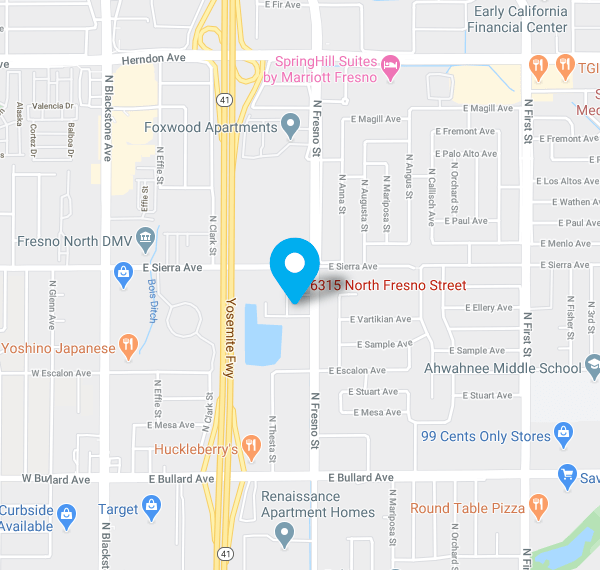
(559) 438-7600 6315 N Fresno St Suite 101
Fresno, CA 93710

Office Hours

  • Monday: 8:00am to 5:00pm
  • Tuesday: 8:00am to 5:00pm
  • Wednesday: 8:00am to 5:00pm
  • Thursday: Closed
  • Friday: Closed
  • Lunch daily from 12:00pm to 1:15pm