Our Blog

Positive Aging with Orthodontics

June 17th, 2026

Crooked or crowded teeth aren’t always just a cosmetic issue; they also are more difficult to clean, which can lead to tooth decay and gum disease. Likewise, if your teeth don’t align properly when you bite (known as malocclusion), this can cause chewing, swallowing, and speaking problems.

You can put these risks to rest and look amazing, however, with well-thought-out orthodontic treatment from Dr. Robert Kubo and Dr. James Kubo. More and more adults are opting for orthodontic treatment and changing their lives in the process.

Childhood is of course the ideal time to get treatment, since the mouth and jaws are still growing, but many adults still can get beautiful and lasting results which can be achieved discreetly and effectively with modern orthodontic appliances and technologies.

Traditional braces used to be the only thing going, and many adults understandably don’t like the way they look. There are so many other options for braces these days that it’s possible for almost any patient to be treated effectively and efficiently — usually in one to two years.

Here are some of the technologies being implemented in our modern Fresno, CA orthodontic office:

  • Clear aligners: Practically invisible clear plastic aligners are great for less severe cases.
  • Lingual braces: These are placed on the back of your teeth instead of the front, and can handle anything that traditional braces can.
  • Ceramic braces: Translucent ceramic brackets make for effective and more discreet treatment.
  • Self-ligating braces: These require less manipulation by the orthodontist, which means fewer appointments and quicker results.

It should also be noted that the goal of orthodontic treatment (especially in adults) isn’t always limited to straightening teeth and/or correcting a bite. Teeth provide support for the lips and cheeks and help define your face.

The relationship between the jaws, teeth, face, soft tissues, and underlying skeleton of the face are important, and an orthodontist takes this into account when designing a smile.

In short, getting orthodontic treatment won’t just give you a good-looking and healthy smile; it can help define and enhance the entire appearance of your face. Knowing just how crucial your teeth are in determining how you look and live will help you age positively and confidently.

Not-So-Sweet Sweets: The five worst candies to eat during orthodontic treatment

June 10th, 2026

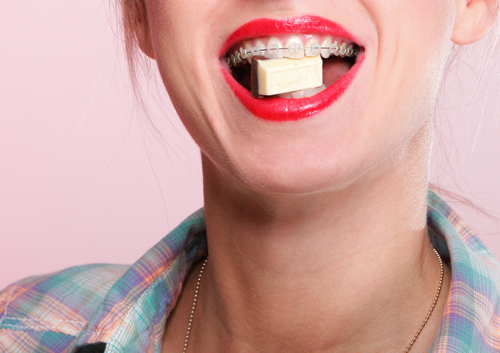
Sticky, hard, and gooey: these candies fill your dopamine receptors with spasms of sugar-filled joy, but if you’re undergoing orthodontic treatment at Kubo Orthodontic Group to straighten your teeth, then these sweets are not so sweet. While you may have a Willy-Wonka-sized sweet tooth, there are some candies you’re going to have to avoid while wearing braces.

Here are five bracket- and wire-destroying culprits that Dr. Robert Kubo and Dr. James Kubo and our team recommend leaving on the candy aisle and not put in your mouth, no matter how tempting they may be.

  1. Gum is sticky and stringy. It can get tangled like fishing net in your braces. You don’t want to be that boy or girl trying to pull knots of Wrigley’s out of your braces without being seen.
  2. All chewy, gooey candies need to be avoided. When you’re wearing braces, don’t even think about putting a caramel candy in your mouth. Caramel will not only stick to your braces, making it look as if you haven’t brushed your teeth in a week, but the gooey texture can pull apart the wires, and trigger an emergency visit to Kubo Orthodontic Group.
  3. Hard candy may seem like a safe choice, but it’s not. What’s the problem? Nobody ever just sucks on hard candy; sooner or later, we bite down on it. Biting a hard candy may cause part of your braces to snap. Furthermore, once the candy is broken into a bunch of little pieces, it’s not uncommon for one of those sugary shards to get wedged between your braces and teeth … and that’s a cavity waiting to happen.
  4. The taffy you enjoy getting at a seaside boardwalk is going to have to go on the back burner. Like caramel, taffy can pull apart and damage your braces. You don’t want to have your expensive orthodontic gear replaced.
  5. Please, just one lollipop? Nope. A lollipop is nothing more than hard candy on a stick. If you can’t have hard candy during orthodontic treatment, then you shouldn't have hard candy on a stick either.

Have any more questions about what you can and can’t eat when you have braces? Please give us a call at our convenient Fresno, CA office to learn more, or ask Dr. Robert Kubo and Dr. James Kubo during your next adjustment visit!

Warming Up for Summer Weather

June 3rd, 2026

School’s out. The barbecue’s fired up. T-shirts and shorts are back in style. Sandy beaches and sidewalks are sizzling. Summer’s officially here, and it’s time to get back into hot weather mode. This means getting back into some healthy summer habits.

Be Ready to Hydrate!

Warm weather can lead to dehydration before you know it. And water does more than hydrate—it rinses away food particles after eating or snacking, neutralizes enamel-eroding acids in the mouth, and helps us keep up healthy levels of saliva. 

  • A reusable water bottle is a summer shopping list must. When you’re out walking, hiking, exercising, or camping, you can’t always be sure you’ll have fresh water available. Fill your water bottle before you leave home—you’ll help yourself stay hydrated, save money, and protect the environment, too!
  • When you’re on the go, rinse with water after snacking to help remove food particles from teeth and braces.
  • Go light on the sports drinks and sodas when planning your summer menus. They’re often filled with sugars and acids—two very unhealthy ingredients for your teeth. 

Restock Your Sunscreen

Sunscreen helps protect skin of all shades and all ages. Exposure to ultraviolet rays is known to cause skin cancer and premature aging. Lip tissue is thin and delicate, especially at risk from the sun’s damaging UV rays. 

  • Check your sunscreen for its expiration date. Protective sunscreens and lip balms lose effectiveness once that date has passed.
  • Some sunscreens are designed for use on lips. If yours isn’t, look for a protective lip balm. All of your sunscreens and balms should have an SPF (Sun Protection Factor) of 30 or higher.
  • Bring your sunscreen and balm with you when you’re out and about, and reapply every two hours, or sooner if you’re eating, drinking, or getting wet.

Prep for Summer Adventures

If you’re travelling this summer, make sure the right dental and orthodontic supplies are part of your gear. A travel size toothbrush and toothpaste, a well-ventilated toothbrush case, and your orthodontist’s and dentist’s emergency contact information are basic necessities. If you wear braces, add dental wax and extra rubber bands. If you have aligners or a retainer, don’t forget your case.

Once you have the basics, you can tailor your kit to your summer plans:

  • Flying? Make sure every liquid, gel, or aerosol you’ll need is the proper size for carry-on flight rules, 3.4 oz (100 ml) or less. Toothpaste and mouthwash are included in these categories, so look for travel sizes in your favorites. 
  • Going overseas? Don’t forget plug adaptors or voltage converters if needed for your electric toothbrush.
  • Camping? An emergency kit with cotton rolls, over-the counter pain relief, oral pain relief gel, dental wax (for damaged braces or a broken tooth), and even temporary fillings and a tooth preservation kit can be crucial in case of unexpected dental injuries.

Make Sure Dental Care Is on Your Summer Calendar

Laid-back summer days are the best, but laid-back dental care really isn’t! Follow your healthy dental routine even during the lazy days of summer.

  • Keep up with your brushing and flossing. Brush two minutes twice each day with a fluoride toothpaste, and floss at least once a day—or more often as your orthodontist recommends.
  • If you’re planning a trip, don’t ignore warning signs. If you have tooth pain or sensitivity, see your dentist to treat any problems before you’re cruising at 30,000 feet or enjoying a remote campout miles from anywhere.
  • See your orthodontist as scheduled, and make sure to let the office know if you have travel plans which might disrupt your regular treatment schedule.
  • Keep your appointments for dental exams and cleanings to ensure year-round dental health.

Whether you’re basking in the warm outdoor weather, relaxing in the shade with a cool drink and a good book, on the road to adventure, or wherever your summer plans take you, we hope these easy tips will help you create a summer filled with bright, healthy smiles.

Sensitive Information

May 27th, 2026

Psst—here’s some time sensitive information just for you. If your teeth are sensitive to heat, cold, sweets, acidic foods, wind and/or air, it could mean it’s time to see your dentist!

Normally, we don’t notice how external conditions affect our teeth at all. Tooth enamel—the hardest substance in the body—protects the inner tooth from outside stimuli. So, why do strong, solid teeth suddenly feel sensitive? The answer’s found in tooth anatomy.

The crown of the tooth, the part we can see above the gum line, has three distinct layers.

  • Enamel, a strong mineral-rich coating, surrounds the outside of each tooth and protects the dentin and pulp inside.
  • Dentin is the softer, porous middle layer of the tooth. Dentin contains thousands of tiny, fluid-filled tubules which extend to the pulp.
  • In the center of each tooth is the pulp chamber, filled with nerves, blood vessels and connective tissue which keep the tooth alive and healthy.

The roots below the gumline have a similar structure, with one important exception.

  • Cementum, which is not as hard and strong as enamel, covers the root surface instead of enamel.

Healthy, undamaged teeth allow you to enjoy an icy beverage, a hot latte, a sweet treat, or a brisk walk without any dental discomfort.

When the tooth’s protective enamel covering is worn or damaged, the dentin below the enamel is exposed to external conditions. Temperature changes, air, wind, sweets and acids—all the stimuli which normally have no effect on our teeth are now transmitted through the dentin’s tubules to the nerves inside the pulp.

The pulp’s nerves respond to these sensations by sending out pain signals. The uncomfortable tooth sensitivity which results is often described as an annoying twinge, a sharp, brief stabbing pain, or a shocking sensation.

The first step in treating dentin exposure is to see your dentist to discover the cause. Tooth sensitivity could be the result of:

Aggressive Brushing

Brushing is great! Over-aggressive brushing? Not so much. Heavy-handed brushing and brushing with anything other than a soft-bristled brush can wear down mineral-rich tooth enamel to expose the dentin underneath, and is even more damaging to less-mineral-rich cementum.

Diet

An acidic or sugary oral environment harms enamel. Consuming acidic foods and beverages erodes the minerals which make enamel so strong. Sugars give plaque bacteria the perfect fuel they need to produce enamel-eroding acids.

Cavities

The bacteria in plaque create acids which strip minerals from tooth enamel. Over time, a hole in the enamel develops, uncovering the sensitive dentin below.

Injuries

A crack or fracture can expose dentin, or, in severe cases, tooth pulp, to foods, heat, cold, and air.

Tooth Grinding

Bruxism, or tooth grinding, often takes place during sleep, and can apply over a hundred pounds of pressure to the teeth and jaws. Continuous grinding and clenching wears away tooth enamel, exposing dentin. Bruxism can also cause chipped and cracked teeth, as well as jaw damage and even tooth loss.

Malocclusion

Occlusion refers to the way our teeth and jaws fit together. In a healthy occlusion, the forces of biting and chewing are evenly distributed. A malocclusion, or bad bite, can cause excessive or uneven pressure on teeth and jaws, leading to worn enamel, cracked teeth, and more serious bite problems.

Just as there are many causes for tooth sensitivity, your dental team in Fresno, CA has many solutions to restore your comfortable, healthy smile.

Choose the Right Products to Protect Your Smile

  • If you’re not using a soft-bristled brush, trade in your old model ASAP, or try an electric toothbrush. Bonus: Electric toothbrushes and water flossers can be especially helpful for cleaning around your braces!
  • There are special toothpastes which are formulated to reduce sensitivity.
  • Fluoride treatments can help strengthen tooth enamel.
  • Talk to your orthodontist, dentist, or hygienist to learn the best ways to brush and the best products to use to protect your dental health and your tooth enamel.

Eat a Dental-Healthy Diet

  • Cut down on acidic and sugary foods and drinks to protect your tooth enamel. And, of course, stick with your braces-healthy diet by removing sticky, crunchy, hard, and chewy items from the menu.
  • Check ingredients. The amount of acids and sugars in foods like sodas and sports drinks could surprise you!
  • If you do eat something acidic, don’t brush right away—rinse with water and wait an hour to give your enamel time to restrengthen and remineralize.

See Your Dentist Regularly

  • Regular exams will discover any cavities before they become deeper and more damaging. Proactive care will also help keep your orthodontic treatment plan on track.
  • Gum disease can cause gum recession, exposing those sensitive, cementum-covered roots. Your dentist will look out for any signs of early gum disease and offer tips for gum health.
  • If you suspect you have an injured tooth, call Dr. Robert Kubo and Dr. James Kubo immediately to prevent more serious damage or infection.

Protect Your Smile from Trauma

  • A custom-fitted nightguard can prevent enamel erosion and other damage caused by bruxism.
  • Wear a mouthguard when playing contact sports or activities to protect your teeth from injuries.
  • If you’re wearing traditional braces, your dentist can customize a nightguard or mouthguard which will work with your braces.

Create a Healthier Smile with Orthodontic Treatment

  • If you suspect a bite problem is causing wear on your teeth, it’s time for an orthodontic consultation with Kubo Orthodontic Group! Orthodontic treatment aligns the teeth and jaws properly, which means that your teeth will fit together without causing any extra wear on your enamel or exposing the sensitive dentin underneath.
  • Preventing worn enamel is, of course, only one benefit of orthodontic treatment. Properly aligned teeth reduce the risk of cavities. Treatment can prevent dental injuries caused by excess pressure and stress. And there’s no underestimating the value of a confident, healthy smile!

If you’re feeling sensitive, especially if discomfort persists or worsens, see your dentist to discover the cause of the problem. Tooth sensitivity is time sensitive. Take care of small problems before they become serious ones, and you’ll help make sure your smile is something you’re not the least bit sensitive about!

Kubo Orthodontic Group
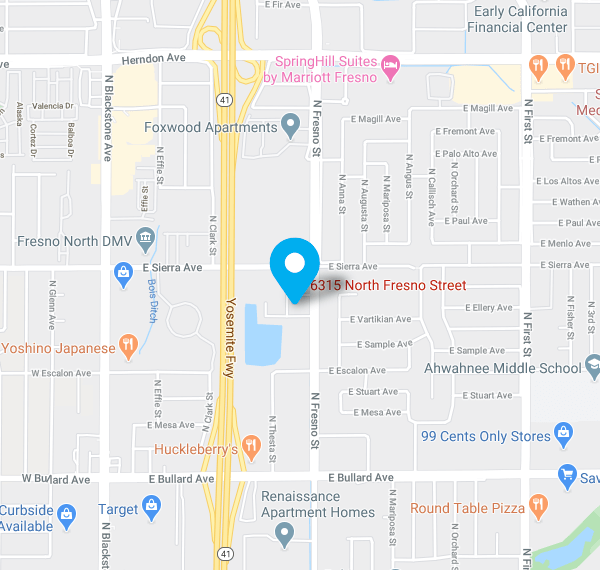
(559) 438-7600 6315 N Fresno St Suite 101
Fresno, CA 93710

Office Hours

  • Monday: 8:00am to 5:00pm
  • Tuesday: 8:00am to 5:00pm
  • Wednesday: 8:00am to 5:00pm
  • Thursday: Closed
  • Friday: Closed
  • Lunch daily from 12:00pm to 1:15pm