Our Blog

Caring for Your Invisalign® Aligners

August 21st, 2018

You’ve selected the Invisalign system because of the many benefits Invisalign offers: comfort, convenience, appearance, and even potentially shorter treatment time! And to add to the good news, caring for your Invisalign aligners is easy and uncomplicated. Follow these simple tips to keep your aligners in the best possible shape as you move through the stages of your treatment.

Stay Clean

  • Always brush and floss your teeth before using your aligners so that bacteria and food particles will not have a chance to collect around your teeth while you wear them.
  • When you brush your teeth, be sure to brush your aligners with a separate soft toothbrush and lukewarm water as well.
  • Rinse your aligners whenever you remove them during the day.
  • Soak your aligners as recommended. Use the Invisalign Cleaning System or ask our Fresno, CA team for other suggestions to keep your aligners free from odor and bacteria.

Stay Clear

One of the reasons you chose Invisalign is for an almost invisible appearance. Why take a chance on discoloration or scratches that will make the appliance more noticeable? Here are some common mistakes that can affect the color of your aligners:

  • If your aligner has white spots, that might mean plaque build-up. Always rinse your aligner after you remove it and clean it thoroughly night and morning.
  • Brushing with anything other than a soft brush and brushing too hard can cause scratches in the material which might be noticeable. A gentle touch will work to clean and protect your aligners.
  • Eating with Invisalign aligners can cause staining. More important, it can cause the retention of food particles in the appliance, which can lead to dental problems. Finally, aligners are not meant for chewing—they might be damaged or lose their ideal shape even with soft foods. If you are going to be eating or drinking, take your aligners out, give them a rinse, and brush before you replace them. Or stick with water! Water will have no ill effects on teeth or aligners.
  • Only soak aligners in an appropriate solution. Harsh chemicals, colored mouthwashes, and even some toothpastes can dim or discolor the clear plastic.

Talk to Dr. Robert Kubo and Dr. James Kubo about the best products to use and the best methods for taking care of your aligners. After all, making the process of improving your smile as easy and effective as possible is yet another benefit of choosing Invisalign!

Whitening Teeth with Braces

August 14th, 2018

Now that you are working hard to improve your dental health and appearance with your braces, it might seem like a logical time to whiten your teeth as well. But should you go ahead with home kits or a professional whitening? The answer might be yes, but not quite yet!

Toothpaste

The easiest way to whiten teeth is regular use of a whitening toothpaste. But these do not make a major difference in tooth color and may also contain abrasives which can damage ceramic brackets and make them more likely to stain. And, whether you have metal or ceramic braces, the brackets used are bonded to your teeth. Any part of your tooth covered by a bracket will not be affected by the whitening paste. Ask our office if you are thinking of using one of these products. We will be happy to recommend the best toothpastes to use while your braces are in place.

Whitening Strips and Trays

Whiteners can be applied at home with strips or tray kits. Strips are coated with a whitening gel and then pressed around your teeth. Tray kits provide a mouthguard-like appliance, which is filled with whitening gel. But neither strips nor tray solutions will whiten any area covered by brackets. When your braces come off, there might be noticeable differences in color on each tooth. Strips are difficult to apply with braces, and trays need to be custom-designed to fit your braces and make sure they don’t disturb your orthodontic work. One size most definitely does not fit all! Finally, these whitening agents can cause tooth and gum sensitivity, especially around the time of adjustments. Many manufacturers do not recommend using their products while you have braces. Please talk to us if you are thinking of using them.

Professional Whitening

A dental professional can whiten your teeth in office for the best possible results. The most effective treatments for your unique teeth are combined with protective care of your gums and mouth. Whether this treatment is appropriate while you have braces is something we are happy to discuss.

The best way to keep your teeth bright is to keep up your regular dental routine! Brushing and flossing are more important than ever now, because plaque builds up around brackets. Avoid foods that stain teeth and rinse or brush after every meal and snack. Dr. Robert Kubo and Dr. James Kubo will show you the best way to take care of your teeth while your braces are on—and that includes the best way to keep them white and bright. Talk to us about the perfect time to whiten your beautiful smile during your next visit to our Fresno, CA office. And if you have to wait a few extra days for the smile you’ve been working toward, truly, the wait will be worth it!

What is a palatal expander?

August 7th, 2018

Orthodontists like Dr. Robert Kubo and Dr. James Kubo recommend a first orthodontic visit and evaluation for your child around the age of seven. We will evaluate your child’s jaw and facial development and make sure that there is enough room in the mouth for the permanent teeth when they arrive. One of the recommendations we might make for early treatment is the use of a palatal expander. If you are unfamiliar with this device, let’s take a closer look at why it’s necessary and what exactly it does.

Why do we recommend the palatal expander?

There are two dental arches, composed of the upper and the lower teeth, in your child’s mouth. This arch-shaped design is meant to accommodate all the permanent teeth. Further, when the upper and lower teeth meet, they should result in a healthy occlusion, or bite.

Sometimes, the upper dental arch is simply too small to accommodate all of your child’s permanent teeth, leading to crowding, extractions, and impacted teeth. Also, a too-narrow arch can result in a crossbite, where some of the upper teeth bite inside the lower ones. An improper bite can lead to problems such as TMJ (temporomandibular joint) disorder, improper wear and stress on teeth, certain speech difficulties, and other potential complications. The palatal expander was designed to prevent these problems from occurring.

What is a palatal expander and how does it work?

The expander itself is a device that increases the size of the upper dental arch. Before your child’s bones are finished growing, the space between the two bones of the upper palate is filled with cartilage. This tissue is flexible when children are young, but gradually fuses solidly into place by the time they are finished growing (usually in the early to mid-teens). If the arch can be widened to accommodate the emerging permanent teeth, or to reduce malocclusions, this improvement can also affect the need for, and length of, future dental work.

There are several types of expanders available at our Fresno, CA office. These are custom-made appliances, commonly attached between the upper teeth on each side of the jaw. The two halves of the device are connected with a screw-type mechanism that can be adjusted to widen the upper palate and dental arch with gentle pressure. This is a gradual process, with small adjustments usually made once or twice a day to slowly move the bones further apart. As weeks go by, you will notice a successful change in the spacing of the teeth. Your child might even develop a gap in the front teeth, which is normal and will generally close on its own.

If you would like more detailed information, talk to Dr. Robert Kubo and Dr. James Kubo about the palate expander. We can tell you what to expect from this treatment if we think it is best for your child’s unique needs, and how to make it as easy as possible for your child. Our goal is to provide your child with the healthiest teeth and bite possible, always making use of treatments that are both gentle and effective.

Generic Clear Aligners vs. Invisalign®

July 31st, 2018

You may have a talent for home repairs. You may be able to rebuild your computer. You may even be able to put together a whole room of furniture armed only with flat-box kits and an Allen wrench. But, please—don’t try do-it-yourself orthodontics!

Now that generic clear aligners are available, you might consider giving them a try to save some money. But is straightening your own teeth really a good idea? Before you are tempted, let’s look more closely at the products and the dental science involved.

Invisalign®

  • Invisalign clear aligners are used by orthodontists and dentists with experience in custom treatment for your smile. A 3D image of your teeth will be captured by the iTero Element® scanner. Using special software, your doctor can map out each projected shift in your teeth, and even show you a projection of your finished smile!
  • Your Invisalign aligners will be tailored to fit your teeth precisely using the 3D scan and 3D printing. They are made from SmartTrack® material, a product specifically engineered for a perfect, comfortable fit. Invisalign aligners are even trimmed to fit your individual gumline to prevent irritation.
  • When your first sets of Invisalign aligners arrive at our Fresno, CA office, Dr. Robert Kubo and Dr. James Kubo will check for fit, answer any questions you might have about use and care, and let you know what to look for and what to expect. Your progress will be monitored with visits every six to eight weeks. (And for parents of teens, Invisalign aligners can offer blue “compliance indicators” to let you know they are being worn the 20-22 hours a day necessary for the best and fastest results.)

Generic Aligners

  • You might be required to make a putty mold of your own upper and lower teeth, which is not the easiest thing to do well, and to take selfies of your teeth.
  • The aligners will be sent to you in the mail. They are generally made of hard plastic with generic gumlines. There will be no one to tell you if the aligners fit properly.
  • They are sometimes less expensive because there is no in-person medical supervision. A dental professional working for the company will look at the model created from molds you submit, and recommend a series of aligners to correct the problems he detects by looking at the model and your selfies. This supervisor will not be able to assess the overall dental health of each patient to make sure teeth and gums are healthy and ready to start treatment, and will not be able to tell if the teeth are moving properly or improperly once the aligners are in use.

Finally, while generic aligners may potentially have some success in minor tooth straightening, they are not created to deal with complex bite issues or malocclusions.  In fact, using generic aligners with no supervision can cause more serious dental problems than a patient started with.

Sure, sometimes a do-it-yourself project turns out well. But your teeth and bones are too important for home improvement. When it comes to creating a beautiful, even smile and balanced, comfortable bite while making sure of your dental health, it’s always best to trust a professional like Dr. Robert Kubo and Dr. James Kubo to provide you with gentle, tested, and successful care!

Kubo Orthodontic Group
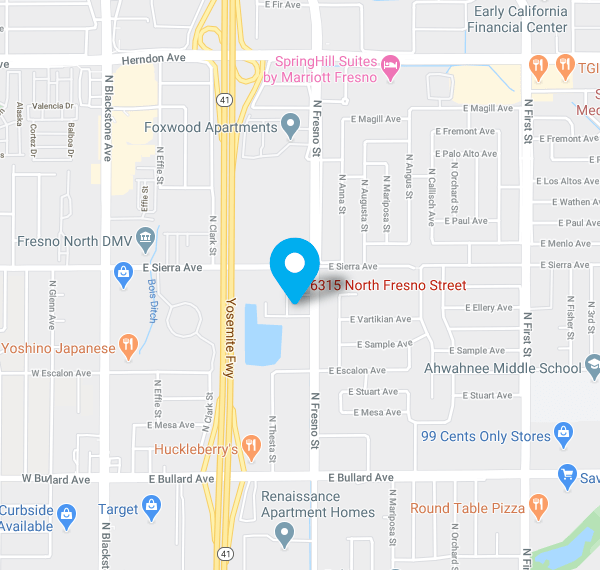
(559) 438-7600 6315 N Fresno St Suite 101
Fresno, CA 93710

Office Hours

  • Monday: 8:00am to 5:00pm
  • Tuesday: 8:00am to 5:00pm
  • Wednesday: 8:00am to 5:00pm
  • Thursday: Closed
  • Friday: Closed
  • Lunch daily from 12:00pm to 1:15pm