
Our Blog

Invisalign Teen®: What Parents Should Know

December 8th, 2015

Invisalign Teen is one the newer styles of braces, and perfect for those who do not like the standard metal braces. They are available in a clear material that is practically invisible called aligners that are replaced every two weeks. The aligners are custom made for each patient and gradually straighten teeth without all of the metal and rubber bands that come with traditional braces.

Is Invisalign as effective?

If your child will wear them as directed to, then the answer is yes, they are as effective as traditional metal braces. However, to make sure the child is actually wearing them correctly you will notice a small blue spot on the back of each aligner. This is called an indicator and if worn correctly will fade over a period of two weeks. Dr. Robert Kubo and Dr. James Kubo will be able to tell if the patient is not wearing them correctly.

Can Invisalign be removed?

Parents should be aware that the Invisalign aligners can be removed for up to four hours per day to eat, brush teeth, play sports, or play musical instruments. With the option of removing them it actually makes brushing and flossing easier and helps oral hygiene. The recommended time to wear them is at least 20 hours per day.

How long does treatment take and what is the cost?

Your teen will wear Invisalign as long as traditional braces. However, each patient is different so you should speak with Dr. Robert Kubo and Dr. James Kubo to determine how many months your child can expect to wear them.

The cost is also very similar to other traditional braces; however there is no set fee. The cost will depend on your child’s unique orthodontic need.

Overall Success

Invisalign Teen has had remarkable success because patients are happy to have the option of having clear aligners for treatment. With the child more confident they are actually more prone to keep up with their treatment and many do complete their treatment sooner. You should speak with Dr. Robert Kubo and Dr. James Kubo as soon as possible to learn about the benefits of Invisalign Teen.

Rubber Band Horoscopes: What your color says about you

December 1st, 2015

One exciting part about wearing braces from Kubo Orthodontic Group is getting to choose the colors of your rubber bands. Orthodontists place elastic bands, or ligatures, over each bracket to secure the archwire in place. These rubber bands may be individual or connected, depending on your mouth’s needs. From Dr. Robert Kubo and Dr. James Kubo, you have the option of choosing the color of your elastics, which are changed about once every month at every visit. Our offices keep a color wheel handy to help you choose which ones suit you best!

Children and teens often enjoy picking different colors each month to express their creativity and coordinate their braces with outfits. Decorating your mouth with your favorite colors is fun for kids and takes some of the stress out of wearing braces. Adults who wish for subtlety have color options that blend in with the metal brackets and archwire. Common choices for adults include silver, clear, and gray tones.

Common Color Combinations for Rubber Bands

With individual ligatures for each bracket, you may choose different color combinations for special events. You can have alternating colors or place an entire rainbow over your teeth. Here are a few options to consider:

  • School spirit colors
  • Favorite sports team colors
  • Patriotic colors
  • Holiday themes

Some patients choose only one color to match their mood, personality, or favorite outfits. The palette of choices allows you to make bold statements with your braces or go for subtler tones that blend in with the metal structures. Keep in mind that bright colors make your teeth look whiter, while lighter shades, such as yellow and white, may cause your teeth to appear less bright.

What Your Rubber Band Color Says About You

  • Red tones indicate that you are ready for action and take charge of your life with aggressive, forward-thinking steps.
  • Blue tones are calm and relaxing. You are conservative and exhibit integrity when dealing with situations.
  • Green tones represent growth and balance. You are level-headed and look for opportunities to grow emotionally and spiritually.
  • Purple tones attract creative energies. You like to have fun and use your imagination in every aspect of your life.
  • Orange tones indicate that you are optimistic and thrive in social situations where communication is open.
  • Pink is a romantic color that represents a caring personality. You also enjoy having fun with silly games and endless laughter.

What is early intervention?

November 24th, 2015

Many developing orthodontic problems can be intercepted and corrected if diagnosed and treated at an early age. Dr. Robert Kubo and Dr. James Kubo and our team at Kubo Orthodontic Group recommend children have their first orthodontic evaluation no later than age seven, or younger if the front four permanent teeth have replaced the baby teeth. Early treatment, also known as interceptive treatment or Phase I treatment, provides both timely detection of problems and greater opportunity for more effective treatment. Early intervention guides growth and development, preventing serious problems later.

If your child is showing these signs, it may be time to think about early orthodontic treatment:

  • Early or late loss of baby teeth (your child should typically start losing teeth around age five or six, and will have all their permanent teeth in around age 12 to 13)
  • Difficulty chewing and/or biting
  • Mouth breathing
  • Sucking his or her thumb
  • Speech impediment
  • Protruding teeth (the top teeth and the bottom teeth extend away from each other)
  • Crowded front teeth
  • Teeth that don't come together in a normal manner or even at all

Early intervention will greatly reduce the severity of your child’s case, and therefore reduce the length of treatment time and cost for a second phase of treatment when all of his or her permanent teeth have erupted. An evaluation at our Fresno, CA office will determine if your child’s dental and skeletal growth is proceeding properly or if interceptive treatment is needed. Many times, a more severe problem can be corrected using sophisticated removable appliances instead of traditional orthodontic treatment.

To schedule a consultation for your child to visit with Dr. Robert Kubo and Dr. James Kubo, please give us a call! We will provide your child with an initial exam, and discuss with you the best steps to take toward caring for your child's smile.

What's in my mouth? A Rundown of Orthodontic Appliances

November 17th, 2015

Dr. Robert Kubo and Dr. James Kubo and our team correct the alignment of your teeth and jaws so that you can speak clearly, chew food effectively, and look attractive when you smile. We do this by putting sophisticated gadgets in your mouth. While many of these dental devices look similar, we use a wide variety of orthodontic appliances to straighten your teeth and repair jaw problems.

Orthodontic appliances are devices that move your teeth, change the position of your jaw, or hold your teeth in their finished positions after your braces are removed. These devices may be attached to your teeth or removable.

Braces straighten your teeth. Brackets, bands, and wires characterize traditional braces. Braces are attached to the teeth, so they are not easily removable.

Spacers are small plastic rings fitted between your back teeth before your braces are placed by Dr. Robert Kubo and Dr. James Kubo. These spacers create space between your teeth to optimize the alignment your braces provide.

Retainers hold teeth in their finished position after your braces come off. A Hawley retainer is the most common type of retainer; it features an acrylic plate that rests against the roof of your mouth and a wire crossing in front of your teeth. Essex retainers are quite popular, as they are durable and nearly invisible.

Bite plates correct a deep bite, where the upper front teeth come down too far over the lower front teeth to cause bite problems.

Holding arches prevent the back teeth from moving forward to crowd the front teeth. A lower lingual holding arch prevents your permanent molars from migrating forward. The Nance holding arch maintains space between teeth after you lose baby teeth and before the permanent teeth come in.

A palatal expander widens your upper jaw by separating the bones of your palate. This appliance helps your top and bottom teeth fit together better. The Quad Helix widens your jaws to create more room for crowded teeth.

Contact our Fresno, CA office today to learn more about the ways we can improve the appeal and function of your smile.

Kubo Orthodontic Group
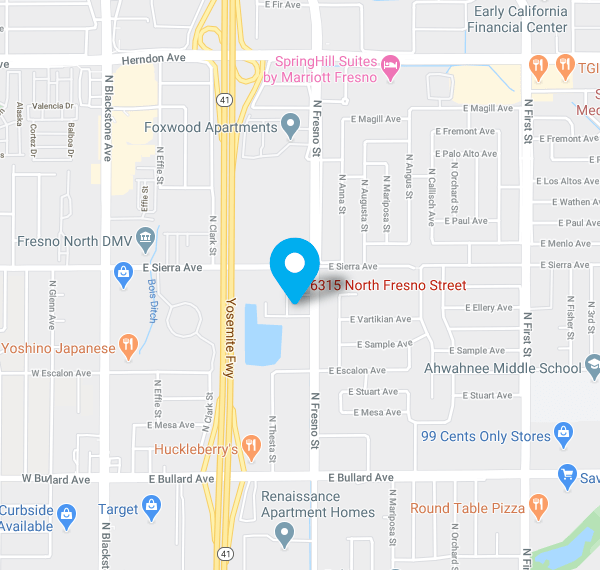
(559) 438-7600 6315 N Fresno St Suite 101
Fresno, CA 93710

Office Hours

  • Monday: 8:00am to 5:00pm
  • Tuesday: 8:00am to 5:00pm
  • Wednesday: 8:00am to 5:00pm
  • Thursday: Closed
  • Friday: Closed
  • Lunch daily from 12:00pm to 1:15pm