
Our Blog

What is malocclusion?

November 10th, 2015

The term malocclusion refers to misalignment of teeth. You may have been born with malocclusion, so your teeth simply grew in crooked, or the misalignment and crowding of your teeth occurred over a period of time. Either way, not only can malocclusion pose cosmetic issues, but it can have a negative effect on your speaking and eating abilities as well.

Types of Malocclusion

Malocclusion encompasses multiple types and classifications of misalignment issues, including twisting or rotation of the teeth and molars that do not meet when you bite down. In some cases, the top front teeth are pushed outward in an upper protrusion.

In other cases, a misplaced midline results when the front top teeth don’t meet with the front bottom teeth. Transposition occurs when teeth protrude through the gums in a position where another tooth is supposed to be.

Practically any type of crowding or spacing issues, rotation or twisting of the teeth, or bite problem – including overbite, underbite, open bite, or crossbite – is included under the umbrella of malocclusion.

Malocclusion Classifications

There are three classifications of bite or misalignment problem.

  • Class 1 malocclusion: While the bite may be normal, the upper teeth overlap the lower teeth slightly. This is the most common type.
  • Class 2 malocclusion: Known as overbite or retrognathism, class 2 involves a severe overlap of the upper teeth and jaw over the bottom teeth and jaw.
  • Class 3 malocclusion: Known as underbite or prognathism, class 3 occurs when the lower teeth and jaw overlap the upper teeth and jaw. Thus, the lower jaw juts forward.

Causes of Malocclusion

The most common cause of malocclusion is genetics. However, there may be other causes, including the development of abnormally-shaped teeth, lost teeth, or impacted teeth; thumb sucking or overuse of a pacifier as a small child; having fillings or crowns that do not fit correctly; a serious injury that causes misalignment of the jaw; or developing a tumor of the mouth or jaw.

Treating Malocclusion

Orthodontic care at Kubo Orthodontic Group with Dr. Robert Kubo and Dr. James Kubo is the main treatment available for malocclusion, which includes getting braces, Invisalign, or other corrective treatments. Treatment is ideal not just to have your smile improved, but because it makes the teeth easier to clean and maintain, lowers the risk of gum disease and tooth decay, and can even take pressure off the jaw and teeth.

Think about orthodontic treatment if you (or your child) display any signs of malocclusion. Early treatment of malocclusion during childhood can lessen expensive treatment later on.

Eating with Braces: Braces-friendly snack recipe

November 3rd, 2015

At Kubo Orthodontic Group, Dr. Robert Kubo and Dr. James Kubo and our staff know that eating with braces can be tricky. You want to avoid damaging the bands, brackets, and wires, since any damage can delay the progress of your treatment. After adjustments, your mouth may also feel sore, which will make eating more of a chore than a pleasure.

The good news is you do not have to avoid all of your favorite foods; there are ways you can still enjoy them. Try some of these ideas and recipes for great snacks that are friendly to your braces.

Fruits and Vegetables

You still need to eat fruits and vegetable for the healthy nutrients. The trick is to cut harder items into small pieces that you can chew easily with your back teeth. Canned fruits are also a great choice, but select fruits packed in water to avoid the heavy, sugary syrups. It’s a good idea to avoid excess sugar with braces, since sugar build-up around your braces can lead to plaque formation.

Single-serving packages are available to make your snack portable and convenient. Enjoy vegetables with a small amount of a healthy dip. Hummus or yogurt can be used for flavor without adding unnecessary fat or calories.

Banana and Honey Smoothie

Smoothies are a healthy treat, and you can create these drinks with your favorite ingredients. You can use a variety of yogurt types for your smoothie: regular, low or non-fat, and Greek are all great choices.  Here’s one of our favorite smoothie recipes:

  • 6 ounces of your choice of yogurt
  • 1 or 2 teaspoons of honey
  • 1 ripe banana
  • 6 ounces milk

Chop the banana into smaller pieces and put all your ingredients into a blender. Blend on low until everything is mixed and then blend on high for about 20 seconds to make your smoothie fluffy.

The great thing about this recipe is that you can substitute just about any small or cut-up fruit for the banana. Try blackberries, raspberries, or peaches for variety. Try to avoid fruits with small seeds; strawberries can leave bits stuck in your braces. You can even make a smoothie with peanut butter and jelly!

Please ask our team if you have any concerns regarding the foods you can safely eat while wearing braces.

What's the difference between an orthodontist and a dentist?

October 27th, 2015

Orthodontists and dentists both help patients improve their oral health, but in different ways. Dentistry is a broad medical specialty that deals with the teeth, gum, nerves, and jaw, while orthodontics is a specialty within dentistry that focuses on correcting bites, occlusion, and the straightness of teeth. One important difference is that all orthodontists like Dr. Robert Kubo and Dr. James Kubo are dentists, but not all dentists are licensed orthodontists.

How are they similar?

The main similarity between a dentist and orthodontist is that they both focus on oral care. An orthodontist can work in a dental office and provide the same care as a dentist. So in this respect, they are quite similar. They are both considered doctors, and deal with the teeth and gums.

How are they different?

There are more differences than similarities. An orthodontist requires additional schooling as a dental specialty; the situation is similar to a doctor who obtains additional schooling to become a surgeon. Another difference is that orthodontists specialize in helping patients with the alignment of their teeth, improving their bite, or fitting them for corrective braces and devices. If a patient has an overbite, a dentist will refer him or her to an orthodontist.

Dentists typically encourage good oral hygiene and provide services related to:

  • Tooth decay
  • Root canals
  • Gum disease
  • Crowns
  • Bridges
  • Veneers
  • Teeth whitening

Orthodontists are dentists that specialize in the alignment of teeth, and provide services related to:

  • Misaligned teeth
  • Crowded teeth
  • Overbite
  • Underbite

What an orthodontist can help with

Orthodontists help with crooked teeth, but they assist patients with other issues as well. These include overbites and underbites, crossbites, spaces between teeth, overcrowding of teeth, and the treatment of temporomandibular disorders (TMD). Additional problems with the jaw also need to be treated by an orthodontist.

While a dentist may be trained to provide orthodontic care in addition to extractions, TMJ treatments, and fillings, trusting your smile to an orthodontist can better balance the different procedures you require.

To learn more about the difference between dentists and orthodontists, or to schedule an initial consultation with Dr. Robert Kubo and Dr. James Kubo, please give our team at Kubo Orthodontic Group a call at our convenient Fresno, CA office.

How Your Pearly Whites Can Help You in Life

October 20th, 2015

At Kubo Orthodontic Group, Dr. Robert Kubo and Dr. James Kubo and our staff have found that patients who like their smiles have better self-esteem. People who don’t like their smiles are often skittish about talking to other people. According to the National Women’s Health Resource Center, when women are asked about what they’d most like to change about themselves, many point to their smile. Despite wanting to change their smiles, quite a few of the people who are unhappy about that part of themselves won’t consider getting braces.

Most Americans Don’t Have Straight Teeth

The American Association of Orthodontics estimates that 4.5 million Americans wear braces or other orthodontic equipment to straighten their teeth and to get a healthier mouth. One in five of those braces wearers are women. The organization’s statistics also show that about 75 percent of the population doesn’t have straight teeth, and those people would benefit from getting braces.

While the main benefit of braces is straight teeth, and to improve the look of your smile, there are other benefits that make braces even more useful, including:

  • Straighter teeth help people chew better.
  • Straighter teeth give people a proper bite.
  • People speak better when they have straighter teeth.
  • When people have straight teeth, they have better overall gum and mouth health. A healthier mouth means flossing and brushing are easier, and that means your entire mouth stays healthy.
  • A healthy mouth is also linked to a healthy body.

When you feel proud of those pearly whites, you feel better about your smile, and that contributes to a better self-image and improved self-esteem. Ultimately, that can lead to greater career success and a more fulfilling social life.

Kubo Orthodontic Group
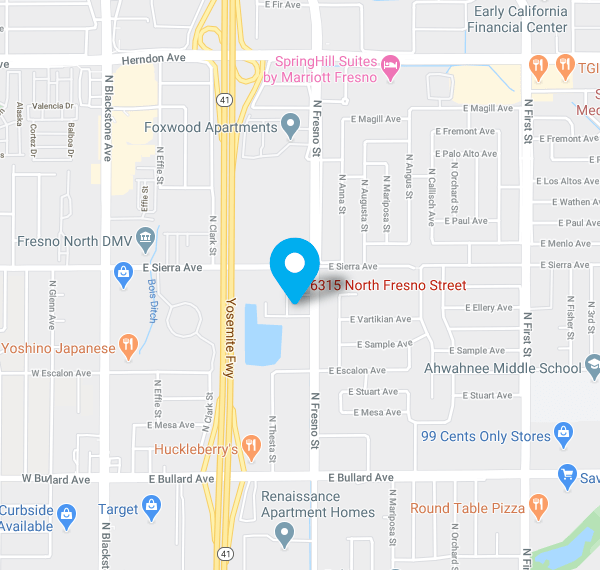
(559) 438-7600 6315 N Fresno St Suite 101
Fresno, CA 93710

Office Hours

  • Monday: 8:00am to 5:00pm
  • Tuesday: 8:00am to 5:00pm
  • Wednesday: 8:00am to 5:00pm
  • Thursday: Closed
  • Friday: Closed
  • Lunch daily from 12:00pm to 1:15pm