
Our Blog

My Mummy had Braces! Weird Facts about the History of Braces

December 16th, 2014

Sometimes real life is stranger and more interesting that any made-up story. These weird and interesting facts about braces will amuse you … and make you glad you didn’t have to get braces “way back when.”

Mummies with braces: Archaeologists have discovered mummies with crude bands of metal wrapped around their teeth. The metal was wrapped around each individual tooth, and it is believed that ancient dentists used catgut to guide the teeth and close the gaps.

First “official” braces: The first official braces were constructed in 1728 by Pierre Fauchard. They consisted of flat strips of metal. String was used to connect the metal to the teeth.

Early rubber bands: In 1850, Tucker began making rubber bands out of rubber tubing.

Brackets are better: Brackets were invented by Edward Angle in 1915. They were not bonded to the teeth directly, but instead were attached to bands that went around the teeth.

Wiring by NASA: As braces have become more modern, the technology has improved by leaps and bounds. You may know that some braces wire contains nickel titanium. What you may not know is that this metal was developed by NASA and has special shape memory that is activated by pressure or body heat.

Over 60 with braces: Actress Faye Dunaway got braces at the age of 61, which shows you are never too old to look more fabulous!

Oh, and one more thing that didn’t quite make our list, but is interesting all the same. Did you know that almost 25 percent of patients who get braces have to get them again because they wouldn’t wear their retainers? So suck it up, buttercup, and use that retainer!

What is a water pick and do I need one?

December 9th, 2014

Water picks, sometimes called “oral irrigators,” make an excellent addition to your regular home care regimen of brushing and flossing. Especially helpful to those who suffer from periodontal disease and those patients of ours undergoing orthodontic treatment with full-bracketed braces, water picks use powerful tiny bursts of water to dislodge food scraps, bacteria, and other debris nestled in the crevices of your mouth. Children undergoing orthodontic treatment may find using a water pick is beneficial if their toothbrush bristles tend to get caught on their wires or brackets.

When you use a water pick, you’re not only dislodging any particles or debris and bacteria you might have missed when brushing, you are also gently massaging the gums, which helps promote blood flow in the gums and keeps them healthy. While water picks are an excellent addition to your daily fight against gingivitis and other periodontal diseases, they are incapable of fully removing plaque, which is why Dr. Robert Kubo and Dr. James Kubo and our team at Kubo Orthodontic Group want to remind you to keep brushing and flossing every day.

If you have sensitive teeth or gums and find it uncomfortable to floss daily, water picks are a good alternative to reduce discomfort while effectively cleaning between teeth. Diabetics sometimes prefer water picks to flossing because they don't cause bleeding of the gums, which can be a problem with floss. If you have a permanent bridge, crowns, or other dental restoration, you may find that a water pick helps you keep the area around the restorations clean.

So how do you choose the right water pick?

Water picks are available for home or portable use. The home versions tend to be larger and use standard electrical outlets, while portable models use batteries. Aside from the size difference, they work in the same manner, both using pulsating water streams. A more crucial difference between water picks is the ability to adjust the pressure. Most home models will let you choose from several pressure settings, depending on how sensitive your teeth and gums are. Most portable models have only one pressure setting. If you want to use mouthwash or a dental rinse in your water pick, check the label first; some models suggest using water only.

Please give us a call at our Fresno, CA office if you have any questions about water picks, or ask Dr. Robert Kubo and Dr. James Kubo during your next visit!

How do I know if I need braces?

December 2nd, 2014

Perhaps you feel your teeth are not perfectly straight, or you think your bite could be adjusted. It’s quite possible that braces and other orthodontic treatments might be the right choice for you. As orthodontic professionals, our team at Kubo Orthodontic Group works with your general dentist in order to determine the best options for your oral health and cosmetic appearance.

You might need braces if ...

  • You lost your baby teeth relatively early in life. If your baby teeth fell out too early and your adult teeth did not come in for a while, this could have affected the way your adult teeth grew and developed.
  • Your teeth look crowded or crooked. If you are embarrassed to smile because your teeth are not straight, it might be time to consider the cosmetic options available to you.
  • Your jaw shifts or makes sounds. This can signify a developmental issue with your teeth and your jaw line, and orthodontic treatment may be able to help. Set up an appointment with Dr. Robert Kubo and Dr. James Kubo if your jaw is recessed or protruding as well.
  • You are constantly biting the sides of your cheek or hitting the roof of your mouth. This could indicate that your teeth are not properly aligned. Braces can address an underbite or an overbite.
  • You have a difficult time chewing your food. This is not only an inconvenience, but it can also be detrimental for your health. Braces can help fix the alignment of your teeth.
  • You have to breathe through your mouth on a regular basis. You may not attribute this to an issue with the development of your teeth or jaw, but orthodontic treatment might be able to help.

The ideal age for a child to be seen by an orthodontist is age seven. However, there are many orthodontic treatment options available to adults. It is becoming increasingly common for adults to wear braces and other orthodontic devices. We recommend that people who are interested in braces and other orthodontic treatment options set up a consultation appointment with Dr. Robert Kubo and Dr. James Kubo today.

Thanksgiving in North America

November 25th, 2014

Thanksgiving marks the start to the holidays; a season filled with feasting, indulging, and spending time with family and friends are always special. Thanksgiving is a holiday meant for giving thanks, and while this may seem like such a natural celebration, the United States is only one of a handful of countries to officially celebrate with a holiday.

Unlike many holidays, Thanksgiving is a secular holiday, and it is celebrated on the fourth Thursday in November in the United States. In Canada, it is celebrated on the second Monday of October, which is, oddly enough, much closer to a time when harvests were likely gathered. In addition to the different dates, the origins of the celebration also share different roots.

Thanksgiving in the United States

Giving thanks for a bountiful harvest are not new, but the modern day holiday in the US can be traced to a celebration at Plymouth in Massachusetts in 1621. This feast of thanksgiving was inspired by a good harvest, and the tradition was simply continued on. At first, the colony at Plymouth didn't have enough food to feed everyone present, but the Native Americans helped by providing seeds and teaching them how to fish, and they soon began to be able to hold a feast worthy of the name. The tradition spread, and by the 1660s, most of New England was hosting a Thanksgiving feast in honor of the harvest.

Canadian Thanksgiving

An explorer of early Canada named Martin Frobisher is accredited for the first Canadian Thanksgiving. He survived the arduous journey from England through harsh weather conditions and rough terrain, and after his last voyage from Europe to present-day Nunavut, he held a formal ceremony to give thanks for his survival and good fortune. As time passed and more settlers arrived, a feast was added to what quickly became a yearly tradition. Another explorer, Samuel de Champlain, is linked to the first actual Thanksgiving celebration in honor of a successful harvest; settlers who arrived with him in New France celebrated the harvest with a bountiful feast.

A Modern Thanksgiving

Today, Thanksgiving is traditionally celebrated with the best of Americana. From feasts and football games to getting ready for the start of the Christmas shopping season, Thanksgiving means roasted turkey, pumpkin pie, and green bean casserole. No matter how you celebrate this momentous day, pause for a moment to give thanks for your friends, family, and all the bounties you’ve received. Happy Thanksgiving from Kubo Orthodontic Group!

Kubo Orthodontic Group
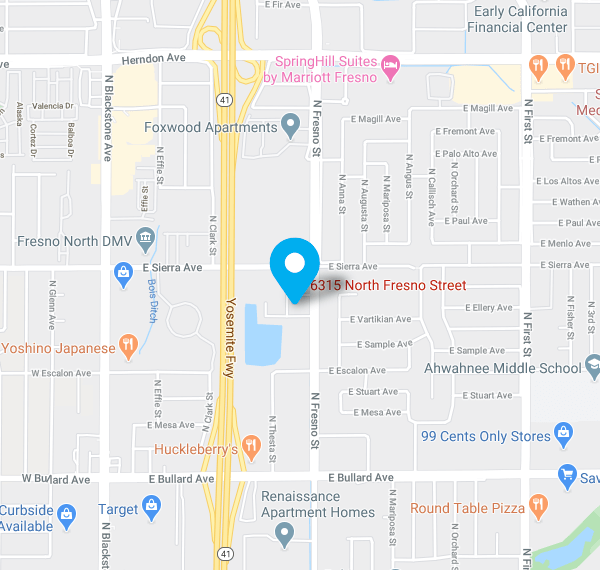
(559) 438-7600 6315 N Fresno St Suite 101
Fresno, CA 93710

Office Hours

  • Monday: 8:00am to 5:00pm
  • Tuesday: 8:00am to 5:00pm
  • Wednesday: 8:00am to 5:00pm
  • Thursday: Closed
  • Friday: Closed
  • Lunch daily from 12:00pm to 1:15pm