Our Blog

How do teeth move with braces?

November 18th, 2014

Although teeth seem to be solidly fixed in their sockets (at least they don’t wobble when we chew!), all teeth can easily be moved if Dr. Robert Kubo and Dr. James Kubo and our staff attach brackets and wires to them called braces. In the past, all braces were made of stainless steel, but today’s advanced dental technology gives people the option of wearing transparent, acrylic mouth trays called Invisalign®, or relying on traditional metal braces for correcting malocclusions.

Brackets, Slots, and Arch Wires – Oh My!

When light pressure is consistently exerted on teeth, they will gradually move in the direction of the force. For example, affixing brackets to front teeth and threading a flexible, metal wire through tiny slots on the front of the brackets allows the orthodontist to tighten this arch wire enough to initiate desired movement of teeth. Generally, orthodontic patients visit Kubo Orthodontic Group once a month to have this wire tightened to keep teeth moving in the desired direction.

Tissues surrounding the teeth that experience pressure from arch wires will slowly (and, for the most part, painlessly) stretch, and allow the socket to enlarge so the tooth and its root become looser temporarily. This allows the root to move without causing bleeding or pain. Once Dr. Robert Kubo and Dr. James Kubo and our staff are satisfied with the repositioning of teeth, we will remove the braces and let bone material fill in the socket so that teeth are solidified into their new (and straighter) positions.

Clear Braces vs. Traditional Braces

Both types of orthodontic corrective devices move teeth in the same manner: by applying a continual force against teeth. Clear aligners, like Invisalign, are mouth trays made of hard acrylic material that people wear for at least 23 hours a day. Unlike metal braces, Invisalign can be removed for eating and brushing purposes and the aligners are nearly invisible because of their transparency.

Invisalign aligners are usually reserved for people with gaps between their teeth or whose teeth are only slightly crooked. Traditional metal braces are often necessary when severe malocclusion exists and requires more pressure than Invisalign offers.

Does my child need two-phase treatment?

November 11th, 2014

Two-phase orthodontic treatment involves two separate and distinct periods that your child receives orthodontic treatment. It allows your son or daughter to begin early treatment of bite and jaw problems, in order to reduce the dental issues he or she experiences later on.

Two-phase orthodontic treatment with Dr. Robert Kubo and Dr. James Kubo can improve how well the second phase of the treatment works and helps to make room for permanent teeth. Overall, two-phase treatment helps to position the teeth and the jaw for an attractive profile. Our team at Kubo Orthodontic Group recommends that you bring your child to our Fresno, CA office at the age of seven or eight, so that Dr. Robert Kubo and Dr. James Kubo can determine if early (Phase-One) treatment is necessary.

Phase-One

Phase-One orthodontic treatment is known as early treatment. It begins shortly after your child’s first orthodontic examination, usually around age eight or nine. The main goal of Phase-One orthodontic treatment is to help make room for permanent teeth, which reduces crooked teeth as a result of overcrowding. It treats the jaw and bite growth, and issues like crossbite or underbite. This can reduce the need for your child to undergo extractions.

Phase-Two

Phase-Two orthodontic treatment is when braces are placed on the upper and/or lower teeth. The purpose is not just to correct spaces or misaligned teeth, but also to correct overbite or underbite concerns. Phase-Two usually begins around age 11 or 12, and the braces are worn for an average of two to three years, depending on your child’s unique needs. Some children have fewer issues and wear braces for little more than a year, while others need them for up to four years.

Signs your child needs two-phase orthodontic treatment

If your child exhibits the following signs, he or she may be a good candidate for two-phase orthodontic treatment:

  • Losing baby teeth early, before five years of age
  • Problems with biting or chewing
  • Sucking the thumb after age five
  • Evidence of a crossbite, where the teeth don’t come together when opening or closing of the mouth
  • Teeth are crowded at age seven or eight
  • Protruding teeth on the top or bottom

Not all children need to have early treatment, but if your child shows any of these signs, you should bring him or her to us for an evaluation at Kubo Orthodontic Group.

Five Braces-Friendly Dinner Recipes

November 4th, 2014

Did you know that more than four million children throughout the US and Canada have braces? At Kubo Orthodontic Group, Dr. Robert Kubo and Dr. James Kubo and our staff know that kids can be picky and meticulous eaters. If cooking for children without braces is difficult, preparing meals for children with braces is especially daunting.

“Comfort food takes on a whole new meaning when cooking for children with braces,” says Pamela Waterman, author of The Braces Cookbook: Recipes You and Your Orthodontist Will Love. “Whether you have new brackets, elastics, headgear, or more, there are great foods you can eat; it just takes some thought.”

These five braces-friendly dinner recipes will be sure to keep your kids smiling!

  1. Macaroni and cheese is the ultimate comfort food. Pasta is soft, so it’s easy for children with braces to eat. The warm, gooey cheese melts in the mouth and doesn’t get stuck in the braces like hard or sticky foods. Chances are good that even the pickiest eater has a soft spot for this homespun classic.
  2. The key to braces-friendly cooking is to replace hard, crunchy foods with softer substitutes. In other words, burritos are a better option than tacos, and lasagna is a better choice than pizza. At the same time, if you have the culinary skills to whip up a pizza with a soft crust, you’re going to win the Best Mom (or Dad) of the Year award.
  3. Your child may not like fruits and vegetables. In fact, he or she may even try to convince you that with new braces, fruits and vegetables are off limits. Nice try, kids. While your child is wearing braces, prepare meals with cooked vegetables instead of raw vegetables. A vegetable stir-fry is a healthy and soft dinner choice for kids with braces.
  4. Whether it’s beef or chicken, meat is a good source of protein. However, meat, even when it’s carefully taken off the bone (kids with braces should never eat meat from a bone), can easily get caught in braces. Sloppy Joes are a good alternative. The beef is softened by the addition of the sauce and less likely to get strung in the wires and brackets of the braces. Serve the Sloppy Joes with a side of mashed potatoes.
  5. Ask any child and he or she will tell you that the best part of dinner is dessert. While hard candy, licorice, taffy, caramel, popcorn, and all other chewy candies should be avoided, ice cream and cake are braces-friendly treats that keep kids smiling.

Need more braces-friendly food ideas? Feel free to ask any member of our team.

Halloween: Candy, costumes, and more!

October 28th, 2014

All Hallows' Eve, more commonly known as Halloween, is a yearly event celebrated on October 31, and one that is anticipated by the young and young at heart all over the world. Some scholars claim that Halloween originated from Celtic festivals that honored the dead or that celebrated the harvest, while others doubt that there's any connection at all to Samhain (a Gaelic harvest festival.) Regardless of its origin, our team at the orthodontic office of Dr. Robert Kubo and Dr. James Kubo hopes that Halloween is fun and enjoyed by all of our awesome patients!

Trick or treat?

In North America, Halloween is predominantly celebrated by children who dress up in costumes, which range from scary to cute, who then go around the neighborhood knocking on doors asking "trick or treat", and they are given candy in return. Trick-or-treating is a time honored tradition, and though many parents groan at the pounds and pounds of candy collected by youngsters and fear for the health of their teeth, there are a few things you can do to help their teeth stay in great shape until the candy is gone:

  • Limit the amount of candy they can consume each day
  • Have them brush their teeth after eating candy
  • Avoid hard, chewy candies as they can stick in hard to brush places
  • Keep candy out of sight to reduce temptation
  • Don't buy candy too far in advance to limit pre-Halloween consumption
  • Help or encourage your children to floss

Halloween Fun

Halloween isn't just about gorging on candy; there are other events associated with this festive day including carving jack-o'-lanterns, painting pumpkins, decorating sugar cookies, bobbing for apples, going to haunted houses, or just curling up on the couch with a bowl full of popcorn and watching some classic, scary movies.

Halloween Around the World

Some countries, like Australia, frown upon Halloween, claiming it is an American event and not based in Australian culture, while others like Italy have embraced the fun and celebrate much as Canadians and Americans do. Mexicans have been celebrating this fun day since around 1960, and it marks the beginning of the Day of the Dead festival. Some countries in Europe have come late to the party, but since the 1990s, countries like Sweden, Norway, and Germany have started celebrating Halloween as well, and finding children in costumes or having ghosts hanging in windows has become commonplace.

Halloween is about fun; stepping outside our normal lives and donning a costume or gathering with friends to knock on doors and ask for candy is as much a part of our culture as hot dogs and barbecue on Labor Day. Have a safe and happy Halloween from the team at Kubo Orthodontic Group!

Kubo Orthodontic Group
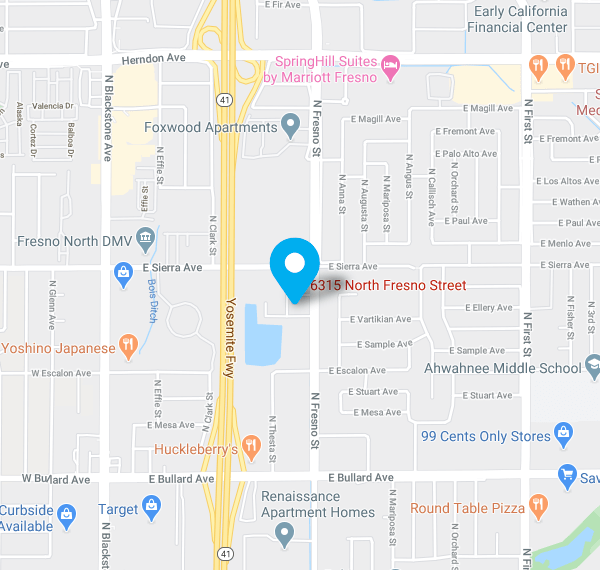
(559) 438-7600 6315 N Fresno St Suite 101
Fresno, CA 93710

Office Hours

  • Monday: 8:00am to 5:00pm
  • Tuesday: 8:00am to 5:00pm
  • Wednesday: 8:00am to 5:00pm
  • Thursday: Closed
  • Friday: Closed
  • Lunch daily from 12:00pm to 1:15pm