
Our Blog

The Damon® System of Braces, from Kubo Orthodontic Group

August 9th, 2013

Until recently, the only option for people who need braces was the traditional type in which a wire threads through a bracket that attaches to each tooth. Both the wires and the brackets extend across the breadth of the mouth. Pressure from the wires moves the teeth into the proper position.

For most patients, traditional braces are far from ideal. They are often very uncomfortable for the patient because the ties that connect wires to the teeth prevent them from moving. Ties are used to create heavy force, but the force cuts off the blood supply between the root of the tooth and the bone surrounding it. Teeth can’t move until the blood flow is restored.

The Damon System aims to guide teeth gently and continuously, and reduce the use of force. Patients have reported that the entire experience of wearing braces is a lot more comfortable. Proud to offer the Damon® System to patients, Dr. Robert Kubo and Dr. James Kubo can help you better understand if it’s right for you.

How the Damon System Works

Unlike traditional treatment with braces, the Damon System doesn't require the removal of teeth or the use of palatal expanders. The system uses unique self-ligating braces, in which a specialized clip with a “door” replaces elastics or other ties. The “door” guides the archwire, and allows the teeth to move gently into the proper position. Because of the increased flexibility of the self-ligating brace, it exerts less pressure on individual teeth, and this means you won’t have to get adjustments as frequently.

Another advantage is the fact that the gentler, low-friction force means you won’t experience the long-term discomfort from intense pressure on your teeth, or the tight wires that are so common with traditional braces. Because there are no ties, Damon braces are also much easier to clean.

Three Components of Damon System

There are three components of the Damon System that create faster results, require fewer appointments, and cause less discomfort for patients.

  1. Because the Damon System doesn't use metal or plastic ties, there is no need to tighten the wire on the braces.
  2. Lightweight shape-memory wires allow teeth the freedom to move faster, without the need for as many adjustments as occur with traditional braces.
  3. The Damon System realigns teeth and enhances facial appearance without extracting teeth or using rapid palatal expanders. The slide mechanism of Damon braces facilitates faster, more comfortable repositioning of your teeth.

Damon System technology can offer you the option of braces that require fewer adjustments, with less pressure on the teeth and the entire mouth. A discussion with Dr. Robert Kubo and Dr. James Kubo will help you determine whether the Damon System is the best option for you or your child.

The Evolution of Braces, from Dr. Robert Kubo and Dr. James Kubo

August 2nd, 2013

Did you know that even in ancient times, people wanted to improve the look and function of their smiles? Kubo Orthodontic Group thinks of modern orthodontic appliances as sleek, efficient technology, but this was not always so! Take a look at the highlights in the evolution of braces.

Ancient Times: From Greece to Rome

  • According to The Angle Orthodontist, Aristotle and Hippocrates first thought about methods for straightening teeth between 400 and 300 BC.
  • The Etruscans, in what we now know as Italy, buried their dead with appliances that maintained spaces and prevented collapse of their teeth and jaws during life. Archaeologists have discovered mummified remains in various locations that have metal bands wrapped around the teeth.
  • A Roman tomb has also been discovered in which the teeth were bound with gold wire, including documentation on the wire’s use as a dental device.

18th Century: A French Development

  • The French dentist Pierre Fauchard is acknowledged as the father of modern dentistry. In 1728 he published a book that described various methods for straightening teeth. Fauchard also used a device known as a “blandeau” to widen the upper palate.
  • Louis Bourdet was another French dentist who published a book in 1754 that discussed tooth alignment. Bourdet further refined the blandeau and was the first dentist to extract bicuspids, or the premolar teeth between canines and molars, for the purpose of reducing tooth crowding.

19th Century: Orthodontics Defined

  • Orthodontics started to become a separate dental specialty during the early 19th century. The first wire crib was used in 1819, marking the beginning of modern orthodontics.
  • During this period, gold, platinum, silver, steel, gum rubber, vulcanite, and occasionally wood, ivory, zinc, and copper were used — as was brass in the form of loops, hooks, spurs, and ligatures.
  • Edward Maynard first used gum elastics in 1843 and E. J. Tucker began making rubber bands for braces in 1850.
  • Norman W. Kingsley published the first paper on modern orthodontics in 1858 and J. N. Farrar was the first dentist to recommend the use of force over timed intervals to straighten teeth.

20th Century: New Materials Abound

  • Edward Angle developed the first classification systems for malocclusions (misaligned teeth) during the early 20th century in the United States, and it is still in use today. Angle founded the American Society of Orthodontia in 1901, which was renamed the American Association of Orthodontists in the 1930s.
  • By the 1960s, gold was universally abandoned in favor of stainless steel.
  • Lingual braces were the “invisible” braces of choice until the early 1980s, when tooth-colored aesthetic brackets made from single-crystal sapphire and ceramics became popular

Today

As we arrive in the present, you need only look at your own braces to see how far we’ve come. Your treatment plan was probably created with a 3D digital model, and we’ve likely used a computerized process to customize your archwires. Perhaps you have clear aligners, self-ligating brackets, or highly resilient ceramic brackets with heat-activated wires.

Orthodontics has come a long way from the days of Aristotle, and even the bulky wrap-around braces of just 60 years ago. Regardless of your specific treatment plan, the development of high-tech materials and methods has made it possible for your orthodontic experience to be as effective, efficient, and comfortable as possible. Call our office in Fresno, CA to schedule your first orthodontic consultation!

http://www.angle.org/doi/full/10.1043/0003-3219(2002)0722.0.CO;2 http://www.archwired.com/HistoryofOrtho.htm

Orthodontic Emergency Care

July 26th, 2013

Although major orthodontic emergencies are relatively rare, when they do happen it is important to seek immediate attention. By comparison, a minor orthodontic issue is something you can usually take care of yourself, or wait until your next scheduled appointment for care. Here are some guidelines to help you understand the difference between an orthodontic emergency and a minor issue.

ORTHODONTIC EMERGENCIES

Acute, Direct Injury to the Mouth, Jaw, or TeethWhether undergoing orthodontic care or not, if you injure your mouth, jaw, or teeth, you should see a doctor or dentist immediately. You may need an X-ray to determine the extent of your injury. If the injury affects the orthodontic appliances, they will need adjustment or possibly replacement, depending upon the extent of the injury.

Infected Teeth

It is possible for teeth to become infected following orthodontic treatment. This may or may not be related to your orthodontic appliances. If you experience pain or swelling around a tooth that gets progressively worse, seek professional care as soon as possible.

MINOR ORTHODONTIC ISSUES

While true orthodontic emergencies are rare, minor issues are much more common. Here are some examples of minor orthodontic issues that can be remedied on your own and/or fixed at your next office visit:

  • Poking wire
  • Loose bracket
  • Loose elastic band
  • Loose wire
  • Loose appliance
  • Headgear does not fit
  • Lost or broken elastic band
  • General soreness

Any of the above issues can happen as a result of normal usage, shifting, and wear of your braces. Eating unusually hard or sticky foods can cause or exacerbate these problems. Vigorous brushing of the teeth can also be a factor. None of these issues are emergencies unless they are accompanied by acute or prolonged pain or discomfort.

As for on-the-spot remedies, covering a loose bracket or wire with wax can be a quick fix to alleviate discomfort until your next orthodontist visit. Poking or protruding wires can be moved with a cotton swab or tweezers, or clipped down with nail clippers. Be sure to sterilize the tweezers or clippers in alcohol first. Cover any clipped wire ends with a small ball of wax.

Some soreness or small abrasions in the mouth are normal, especially with recent orthodontic work. Rinse your mouth with a saltwater solution comprised of eight ounces or warm water and one teaspoon of salt.

When in doubt, be sure to contact our Fresno, CA office with any questions, or to schedule an appointment with Dr. Robert Kubo and Dr. James Kubo at Kubo Orthodontic Group.

Ask Dr. Robert Kubo and Dr. James Kubo: "What should I ask during my orthodontic consultation?"

July 19th, 2013

If you have been thinking about undergoing orthodontic treatment to straighten teeth or correct jaw alignment, the first step is scheduling an orthodontic consultation at Kubo Orthodontic Group. During the consultation we will actively listen to your concerns and address all of your questions, as well as discuss a treatment options that would best suit you or your child's situation.

Here are your top five questions that most patients want answered during their initial orthodontic consultation.

• Can I benefit from orthodontic treatment, and if so, how long will it take?

• How frequently will my appointments be scheduled?

• Can I expect any pain when getting braces? (Ask Dr. Robert Kubo and Dr. James Kubo about the ways we address pain management).

• Will I need to have teeth extracted, headgear, expansion appliance, etc. ?

• How much will it cost and what payment options do you offer?

Visit our website for more answers to your questions prior to your initial consulation.

Dr. Robert Kubo and Dr. James Kubo and our team at Kubo Orthodontic Group are happy to answer all your questions and concerns, and we are happy to explain all aspects of your treatment plan, as well as the expected outcome. We believe your orthodontic experience should be comfortable, hassle-free, and most importantly, leave you with the smile you've always wanted.

Kubo Orthodontic Group
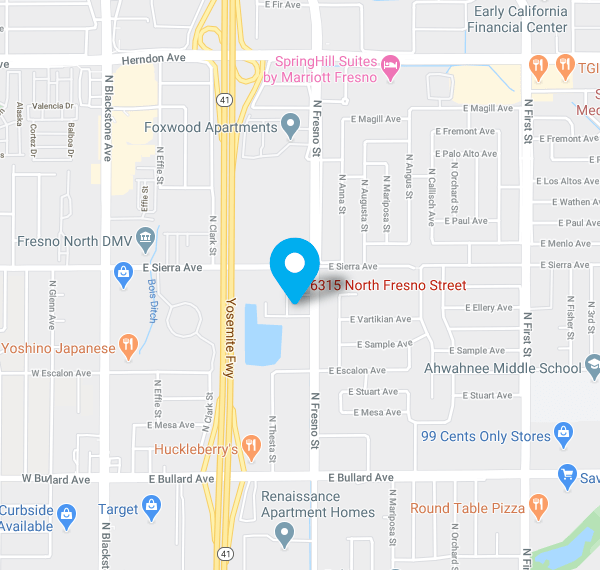
(559) 438-7600 6315 N Fresno St Suite 101
Fresno, CA 93710

Office Hours

  • Monday: 8:00am to 5:00pm
  • Tuesday: 8:00am to 5:00pm
  • Wednesday: 8:00am to 5:00pm
  • Thursday: Closed
  • Friday: Closed
  • Lunch daily from 12:00pm to 1:15pm