
Our Blog

Courting Disaster

September 28th, 2022

When we think of sports and dental damage, we naturally think of hockey and football. But when it comes to the actual number of dental injuries suffered each year, vying for top seed is the game of basketball.

How is this possible? After all, football and hockey are categorized as “collision sports”! But along with the helmets, shin guards, and padding, these teams quite often require mouthguards—and this makes all the difference. Studies have shown that an increase in the number of players wearing mouthguards means a decrease in the number of oral traumas.

And while basketball isn’t considered a collision sport, it is a contact sport. Basketball is a combination of running, jumping, hard surfaces, and solid bodies. And elbows. We can’t forget elbows. So a broken or even a knocked out tooth isn’t, unfortunately, all that unusual when bodies in motion meet hard surfaces—or other players. But there are other dental dangers as well. Besides tooth injuries, oral injuries can involve:

  • The ligaments and bone structures holding teeth in place
  • Bones in the upper and lower jaw
  • Delicate gum, tongue, and mouth tissue.

You need a solid defensive strategy to reduce the severity of oral injuries or to prevent them from happening altogether, especially when you wear braces. The best play in your playbook? Wearing a mouthguard!

Choosing the right guard is key. There are three common options, and you can choose the model which works best for you:

  • Stock guards, which are ready-made guards in pre-formed shapes and sizes. You can buy them over the counter in drug stores and sporting goods stores. Because these guards aren’t shaped to fit your teeth and mouth specifically, they can be less protective (and harder to speak around).
  • “Boil-and-bite” guards can also be purchased, and can provide a closer fit. After warming the guard in hot water as directed, you place it in your mouth and bite down firmly to mold it to your teeth.
  • Dr. Robert Kubo and Dr. James Kubo can make you a mouthguard that is designed and crafted specifically for your use. Because this guard is custom-fitted, it provides better protection for your teeth and mouth. Patients often find custom guards much more comfortable and more durable as well.

Mouthguards are most effective when you wear them on the court and care for them off the court. This means avoiding a few flagrant fouls.

  • Dirty play

All those moist nooks and crannies inside your mouthguard are a perfect environment for bacteria, mold, and plaque buildup. You should clean your mouthguard carefully every time you wear it, and let it air dry before popping it back in the case. Ask Dr. Robert Kubo and Dr. James Kubo for advice on getting your guard and its case their cleanest.

  • Failure to sub out in a timely fashion

Mouthguards don’t work if they’re damaged. If you notice any warping, breakage, or jagged or sharp edges, contact our Fresno, CA office for a replacement. If a guard doesn’t fit you properly, it doesn’t protect you, and sharp edges can irritate or injure delicate mouth tissue.

  • Unnecessary roughness

Your mouthguard protects you, so don’t forget to protect it! Keep your guard in its case when you’re not wearing it to save it from dirt, damage, and disappearance.

If you know your basketball, you know your guard game can make all the difference. Even though a mouthguard might not be mandatory on your team, that doesn’t mean it’s not essential. Remember that basketball is a contact sport, and protect your teeth, your mouth, and your braces with a mouthguard whenever you play.

Are you too sensitive?

September 14th, 2022

We’re not talking about tearing up at the end of a sad movie, or that uncomfortable scratchy feeling you get from a coarse wool sweater—no shame in that kind of sensitivity! But it is a shame if you’re feeling unpleasant tooth sensitivity, especially while you’re wearing braces. No fear—we have some helpful ideas to make you more comfortable as you create your healthy, confident smile.

What do we mean by tooth sensitivity? You know it if you’ve felt it. Pain when you have a cold drink. Or a hot one. Or a sweet treat. Wincing when a light breeze hits your smile. Discomfort after an adjustment.

Fortunately, these annoying twinges can be avoided or eased with some proactive practices.

Keep Up with Your Brushing and Flossing

The oral bacteria in plaque break down enamel when they’re left on the teeth for too long. The result is a cavity, which leaves your sensitive dentin, the layer of the tooth between the enamel and the inner pulp chamber, exposed to elements which can trigger pain. These all-too-common elements include heat, cold, air, or sweet foods. If you suspect you have a cavity, a visit to the dentist will make sure your tooth is cleaned and filled to prevent further damage.

Better yet, prevent cavities before they cause tooth sensitivity. It can be harder to keep your teeth their cleanest while you’re in braces, but it’s more important than ever. You don’t want to have brackets and wires removed, even temporarily, to treat a cavity! You can keep decay at bay by:

  • Brushing after every meal and snack.
  • Flossing whenever necessary, making sure to clean around your brackets and wires.
  • Using cleaning tools made for braces for the easiest and most effective dental hygiene.

Avoid Aggressive Brushing

If you’re using anything other than a soft toothbrush, time for a shopping trip! Using a stiff bristled brush is almost always too abrasive for even the strongest enamel. And vigorous brushing is more harmful than helpful. Poor tools and poor technique can wear away enamel, and, when enamel is worn away, the more sensitive dentin is exposed. Your gums can also be injured, exposing the tops of your roots—which are more sensitive than the enameled crowns.

If your teeth are sensitive because of abrasive brushing, talk to Dr. Robert Kubo and Dr. James Kubo about possible solutions for keeping your teeth both clean and strong.

  • Use a softer-bristled brush.
  • Try toothpaste designed for sensitive teeth.
  • Practice proper brushing technique. Gently rub, don’t scrub!

Care for Yourself after Adjustments

Your teeth might be sensitive after an adjustment. This discomfort is normal, and should pass in a few days. In the meantime, treat yourself kindly.

  • Brush as usual, taking special care to brush gently.
  • Fill your menu with soft and soothing foods. Cool treats like classic ice cream and pudding, or healthier choices like frozen yogurt and fruit smoothies. Comfort foods like cream soups and mashed potatoes. Or all-day breakfasts of oatmeal, pillowy pancakes, or scrambled eggs.
  • Take over the counter medication as recommended and as necessary.

Be sensitive to your needs while you’re in braces. If you’re feeling any kind of tooth sensitivity, talk to Dr. Robert Kubo and Dr. James Kubo at our Fresno, CA office. We have solutions which will make sure you’re both comfortable and twinge-free on your journey to a healthy, attractive smile!

What was your favorite part of summer?

September 7th, 2022

It's the end of summer, and fall is just around the corner. Soon the temperatures will cool down, the leaves will start to change, and Dr. Robert Kubo and Dr. James Kubo and our team at Kubo Orthodontic Group are sure that you’ll soon be thinking about Halloween costumes and Thanksgiving plans in no time. But wait! First, we want to know about your favorite parts of the summer! Did you go on a wonderful family trip? Did you pick up a new hobby? Did you try to spend as much time outside and in the sun as possible?

Share your favorite memories, stories, or photos with us by leaving a comment below or on our Facebook page.

Overbite or Overjet?

August 31st, 2022

The words “overbite” and “overjet” certainly sound similar. Both conditions concern your front teeth. Both conditions fall under the same category of bite problems—Class II malocclusions, if you want to be technical. So it’s not surprising that they’re often used interchangeably. But while there are similarities, overbite and overjet are also distinctly different.

  • Overbite/Overjet Geometry

In a healthy bite, the front top teeth project slightly beyond, and slightly overlap, the bottom teeth. The key word here is “slightly.” With a Class II malocclusion, the upper front teeth project further beyond the lower teeth than they should.

Of course, teeth and bites are as individual as we are, so there are variations in just how and just how much the overlap occurs. In diagnosing an overbite vs. an overjet, the difference comes down to a matter of vertical vs. horizontal.

An overbite, or deep bite, occurs when the top teeth vertically overlap the bottom teeth more than they should for a healthy bite. Generally, when a person’s top teeth cover more than a quarter of the bottom teeth when biting down, or more than two to three millimeters, that person is said to have an overbite.

An overjet, commonly known as protruding or buck teeth, is the result of a horizontal overlap that is broader than normal. This causes the top teeth to project outward toward the lips more than they do in a typical bite. An overjet is usually diagnosed when the horizontal distance between the top and bottom teeth exceeds two to three millimeters.

  • Overbite/Overjet Causes

The causes for both an overbite and an overjet might be dental (caused by tooth alignment), or skeletal (caused by bone development), or a combination of both. These bite problems can run in families. They are also affected by the size and position of the jaws and the shape and position of the teeth.

Early oral habits, such as prolonged and vigorous thumb-sucking or pacifier use, can also contribute to the development of a Class II malocclusion, particularly an overjet. Consistent pressure from thump or pacifier pushes the teeth outward as they erupt, which encourages them to protrude. These oral habits can affect the shape of the palate and jaw, too.

  • Overbite/Overjet Treatments

There are many types of treatment available to correct teeth and bite misalignments. Dr. Robert Kubo and Dr. James Kubo will tailor your treatment to your specific malocclusion for the best orthodontic outcome.

If you have a mild malocclusion, and minor dental issues are the main cause of that malocclusion, either braces or clear aligners can be effective for an overjet or an overbite. Elastics (rubber bands) are often used as part of this treatment.

If the malocclusion is due to bite problems caused by uneven upper and lower jaw development, devices called functional appliances can be used with braces to help guide the growth of the jawbones while young patients’ bones are still forming. These include appliances that work inside the mouth to help the upper and lower jaws grow proportionally, and external appliances such as headgear.

In some cases, where the malocclusion is skeletal in nature as well as dental, surgical treatment might be necessary to reshape the jawbone itself. Orthodontic treatment is usually needed as well both before and after surgery.

  • Overbite/Overjet Consequences

Over time, a deep overbite can cause damaged gum tissue, worn enamel, and fractured teeth. When teeth protrude because of an overjet, they can lead to self-consciousness and are more at risk for injury. Both malocclusions share dental and medical consequences, including concerns about facial and jaw appearance, problems speaking or chewing, headaches, and face and jaw pain.

Class II malocclusions aren’t all the same, and orthodontic patients aren’t all the same either. You may have a minor malocclusion or a significant one. You may have an overbite, or an overjet, or a combination of different bite and alignment concerns. Your malocclusion may not bother you at all, or it may cause pain, discomfort, or self-consciousness.

That’s why every overbite or overjet should be evaluated by an orthodontist. When you visit our Fresno, CA orthodontic office, Dr. Robert Kubo and Dr. James Kubo will be able to diagnose the exact nature of your malocclusion, the reason for it, and your best individualized treatment plan. An overbite and an overjet are different malocclusions, but you and your orthodontist want the same outcome for each: a healthy, attractive, and confident smile!

Kubo Orthodontic Group
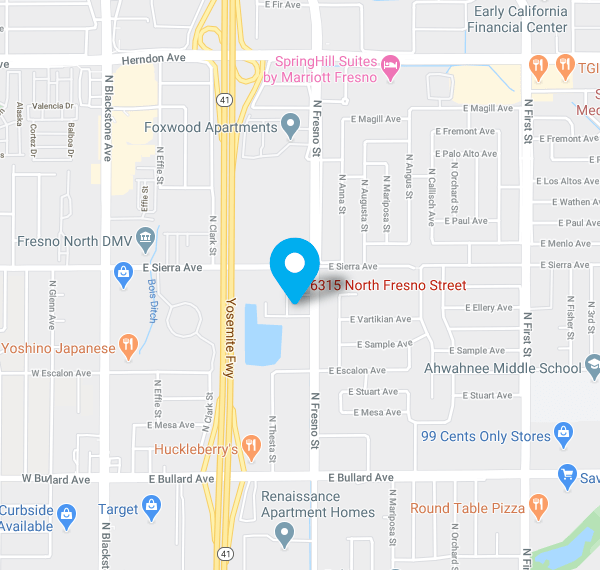
(559) 438-7600 6315 N Fresno St Suite 101
Fresno, CA 93710

Office Hours

  • Monday: 8:00am to 5:00pm
  • Tuesday: 8:00am to 5:00pm
  • Wednesday: 8:00am to 5:00pm
  • Thursday: Closed
  • Friday: Closed
  • Lunch daily from 12:00pm to 1:15pm