Our Blog

How can I protect my child's teeth during sports?

March 23rd, 2022

Sports are great for children for a variety of reasons. Children can develop their motor skills, learn how to solve conflicts and work together, and develop their work ethics. As a parent, you may recognize the benefits of sports, but also naturally worry about your child’s health and safety. Your job goes beyond providing a water bottle and making sure your child follows the rules of the game.

Although you may not think of your child’s teeth first when you think about sports, accidents can happen that affect your children’s teeth. A stray hockey stick, an errant basketball, or a misguided dive after a volleyball are examples of ways a child could lose a tooth. In fact, studies show that young athletes lose more than three million teeth each year.

Becoming a Better Athlete to Protect Teeth

Becoming a better athlete involves refining skills, learning the rules of the game, and being a good sport. These components are not just about winning. They are also about safety. Young athletes who are better ball-handlers and who are careful to avoid fouls and penalties are less likely to have harmful contact with the ball, teammates, or opponents. Children who are better roller-bladers are less likely to take a face plant into the blacktop, and more likely to save their teeth. Being a good sport and avoiding unnecessary contact is one way to protect teeth.

Proper Protective Equipment for Teeth

If your child is in a sport that poses a high threat to teeth, it is essential for your child to wear a mouthguard. Mouthguards fit your child’s mouth and consist of soft plastic. Dr. Robert Kubo and Dr. James Kubo can custom fit a mouthguard if generic ones are uncomfortable. While children may resist wearing a mouthguard initially, your persistence in insisting that they wear it should be enough to convince them. A helmet or face mask provides additional protection.

While prevention is best, rapid treatment can improve the situation if your child does happen to lose a tooth during sports. Rapid implantation can work in about ten percent of cases. To learn about ways to save a lost tooth, contact our Fresno, CA office.

Orthodontics and Whole Body Health

March 16th, 2022

In recent years, many links have been established between orthodontic treatments and whole body health. According to the National Institute of Dental and Craniofacial Research, researchers have observed that people with gum disease are more likely to develop heart disease or experience difficulty controlling blood sugar than people without gum disease. While researchers continue to find associations between oral health and the overall health of the body, as of yet it hasn’t been determined whether gum disease is the sole cause of these health conditions. What can be determined, however, is that good oral health isn't just about maintaining a healthy smile; it has an impact on the health of your entire body.

The associations between gum disease and whole body health

The links between the health of your mouth and the health of your body are too many to ignore. Is it a coincidence that gum disease and other health problems occur together? Researchers don’t think so, despite the lack of definitive proof.

Here are four possible connections between the health of your mouth and the health of your body.

  • Excessive oral inflammation has been linked to a greater incidence of clogged arteries.
  • The American Society of Microbiology has revealed that certain types of oral bacteria can infect the arterial cells and weaken the wall of the heart.
  • Loose teeth are often believed to be a warning sign for osteoporosis, a disease that causes the bones to become less dense.
  • Some studies suggest women with gum disease are more likely than those without gum disease to deliver preterm, low-weight babies.

Orthodontics and gum disease

So what does undergoing orthodontic treatment at Kubo Orthodontic Group have to do with gum disease? Braces do so much more than give you a nice-looking smile. Quite simply, straight teeth are easier to keep clean than crooked teeth. Your toothbrush is able to remove more plaque-causing bacteria, and your floss is more effective at ridding tiny particles between your teeth.

Despite the lack of hard facts in these findings, the message is clear: If you improve your oral health, you will also have a greater chance of maintaining the health of your entire body. And that’s a chance Dr. Robert Kubo and Dr. James Kubo and our team at Kubo Orthodontic Group believe is worth taking. For more information about this topic, please give us a call at our convenient Fresno, CA office or ask Dr. Robert Kubo and Dr. James Kubo during your next visit!

Retainer Hacks

March 9th, 2022

Even with the best of care, accidents can happen, and your retainer, unfortunately, is not immune. Of course, you need to visit our Fresno, CA office ASAP if your retainer is damaged, but, in the meantime, there are some strategies you can use to help your teeth—and your retainer—stay as healthy as possible while you wait.

For Removable Retainers

  • When you notice any damage to your removable retainer—remove it.

Don’t wear a damaged retainer, especially overnight. You don’t want to damage it further, and you do want to avoid the possibility of choking if a retainer breaks while you’re sleeping. Dr. Robert Kubo and Dr. James Kubo and our orthodontic team are experts when it comes to deciding if your retainer is wearable, so always consult an expert before putting a suspect retainer back in your mouth.

  • Damaged Hawley retainer?

If you have a Hawley retainer—the traditional wire retainer—here’s some good news: a Hawley retainer can often be repaired if it’s not damaged too badly. Don’t try to fix your retainer yourself, and bring it into our office as soon as possible to see if it’s fixable.

  • Damaged clear retainer?

If you have a clear retainer, let’s start with the bad news: A clear retainer is not a repairable retainer. Cracks, breaks, warping—these injuries mean that a new retainer is in your future.

The good news is that materials for plastic retainers are available that are more durable than ever. This might be a good option for you to check out, especially if you suffer from bruxism, or tooth grinding, which can be very hard on clear retainers.

  • When you’ve just finished treatment with clear aligners . . .

It’s worth asking if your last tray can sub for your retainer until you have it repaired or replaced.

  • Ask us about over-the-counter mouthguards.

While you wait for a retainer repair/replacement, your teeth are at risk of shifting out of alignment. A customizable OTC mouthguard might reduce the chance of shifting, although it’s definitely not a long-term solution! We can let you know if this temporary fix is worth it.

For Fixed Retainers

If the wire retainer bonded to your teeth becomes loose, or if you notice your teeth shifting, you might need a repair or a replacement. This is a job for us. In the meantime,

  • When you have a broken wire . . .

If a broken wire is causing discomfort, check to see if you should flatten it or cover the wire tip with dental wax to protect soft tissues. Warm water rinses can ease irritation.

  • When your wire is broken or loose . . .

Stay away from chewy, sticky, and crunchy foods. You should be doing this anyway with a fixed retainer to keep it from becoming detached—and if it’s already loose, no need to make it more so!

  • Ask us about over-the-counter mouthguards.

Check to see if an OTC, customizable mouthguard is a good idea to keep your teeth from shifting if you can’t visit Kubo Orthodontic Group right away.

We started off by saying that accidents can happen even with the best of care. So you can imagine what can happen without the best of care. Keep your retainer in its case, keep it away from heat, don’t eat foods that can harm your retainer—all the precautions that make accidents unlikely to happen.

But if something awful befalls your retainer, call our Fresno, CA office right away. Why aren’t we suggesting ways to fix your broken retainer with the supplies you have in your home toolbox? Because the best life hack of all for someone with a damaged retainer is to leave the fixing to a dental professional.

How Braces Can Work at Any Age

March 2nd, 2022

Are you an adult who is considering getting braces? Perhaps you’ve had them before, but over the years that dental work has been reversed. Or maybe you’ve never had any orthodontic work done, but are considering braces for the first time. In either case, Kubo Orthodontic Group can help you enjoy straighter teeth, an improved bite, and a more beautiful smile. If you are considering getting braces, here is what you need to know about adult orthodontic work from Dr. Robert Kubo and Dr. James Kubo.

Can braces work for adults?

Absolutely! Braces work for just about anyone. However, there are several different types of braces, and not all of them may work for you. Different types of orthodontic treatments include:

  • Ceramic braces
  • Metal braces
  • Self-ligating brackets
  • Lingual brackets (braces behind the teeth)
  • Invisible braces
  • Rubber bands for bite correction
  • Headgear and other appliances

By scheduling a consultation, we can determine which treatment or combination of treatments would be best for your specific needs.

How do I get started?

Getting braces can be a little bit daunting. At first glance, the process may appear expensive and time-consuming. However, if you take it step by step, getting braces can be a simple and relatively pain-free experience. Here are the first steps you need to take to get on the road to straight teeth:

First, you need information. If you are nervous about getting braces, or are having trouble getting started, learning more about the process can help ease your mind. Here are a few sample questions to ask:

  • What kind of braces do you recommend for my teeth?
  • How long will the treatment take?
  • How often will I need to come in for adjustments?
  • What is the total cost of the treatment? Do you accept insurance? Will you require the full amount up front, or do you have payment plans?

Asking these types of questions will help you understand what to expect during the entire process, which can aid your decision on the proper course of action.

The next step is to complete any prerequisite treatment. During your first meeting with Dr. Robert Kubo and Dr. James Kubo, we’ll need to take some X-rays and molds of your teeth, and then help you determine an appropriate treatment plan. Recommendations may include some preliminary dental work before you get your braces, which can be an important step in making sure your orthodontic treatments are effective.

Once you have completed these steps, you are ready to get started! After you’ve chosen a treatment plan and undergone any necessary prerequisite dental work, you’ll be able to get your braces. Just like that, you’re on your way to a better smile! If you’d like to get started right away, call our Fresno, CA location today!

Kubo Orthodontic Group
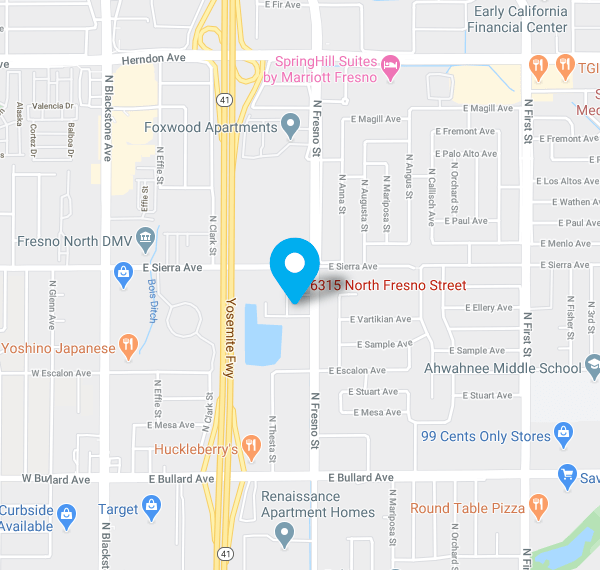
(559) 438-7600 6315 N Fresno St Suite 101
Fresno, CA 93710

Office Hours

  • Monday: 8:00am to 5:00pm
  • Tuesday: 8:00am to 5:00pm
  • Wednesday: 8:00am to 5:00pm
  • Thursday: Closed
  • Friday: Closed
  • Lunch daily from 12:00pm to 1:15pm